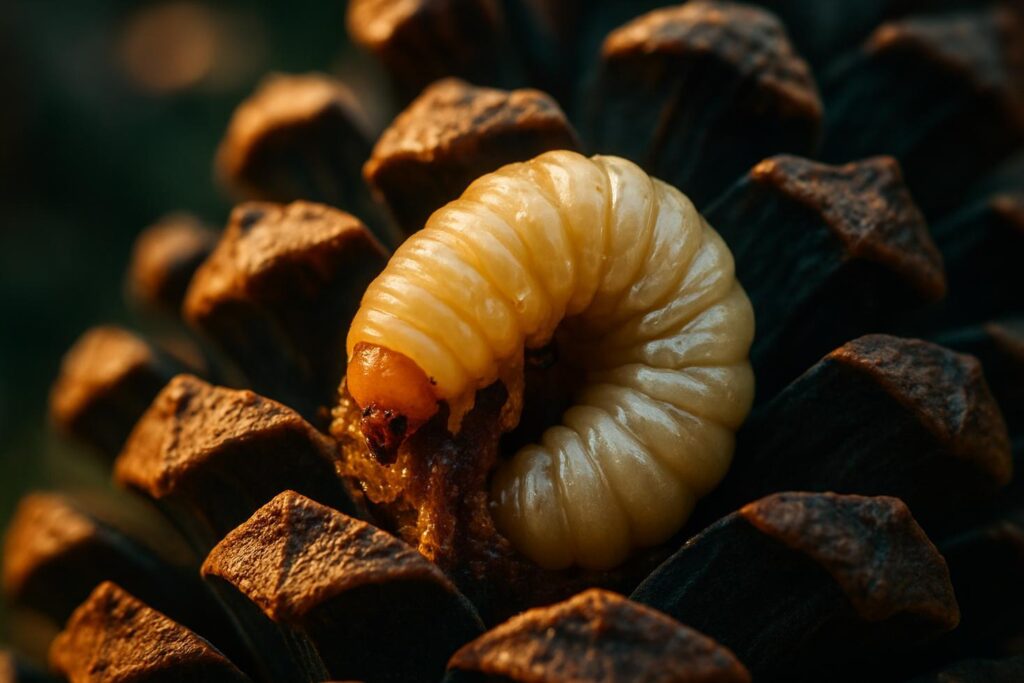
A single ponderosa pine cone holds 50–70 seeds — and at least 69 insect species have been documented using those cavities to feed, develop, and overwinter. That cone on the shelf was already occupied.
A ponderosa pine cone is a structured system of protected cavities packed with developing seeds — and researchers have documented at least 69 different insect species using those cavities in ponderosa pine cones alone. That number comes from USDA-linked technical reporting on cone fauna specifically tied to ponderosa pine. It is not a rough estimate for pine cones in general.
What makes that figure striking is the architecture that produces it. Each cone holds 50 to 70 seeds, and each seed is a potential feeding site. Beetles, moth larvae, weevils, mites, and parasitoid wasps all exploit the same sealed structure — often simultaneously, at different layers.
How Different Insect Groups Use Pine Cone Cavity Structure
Cone insects divide the available real estate by method. Cone beetles and cone weevils tunnel through the woody core, leaving internal channels and frass. Moth larvae hollow out individual seeds from inside, consuming tissue while the exterior of the cone remains visually undisturbed. Mites occupy the narrow gaps between scales, using those spaces as shelter rather than active feeding sites.
The parasitoid layer adds another dimension. Chalcid wasps and other parasitoids lay eggs inside the larvae already developing within the cone, so a single structure supports predator and prey stacked within the same cavities.
What the Documented Damage Numbers Show
In a peer-reviewed study of Pinus strobiformis cones sampled across tree populations in Mexico, every sampled population showed insect damage. Lepidoptera accounted for 72% of that damage. Conophthorus ponderosae, the cone beetle, accounted for 15%. Leptoglossus occidentalis, the western conifer seed bug, accounted for 7%. The parasitoid wasp M. albifrons accounted for 6%.
Damage diagnosis relies on resin flow, frass, boring holes, and internal tunnels — signs invisible from the outside of an intact cone. Cone beetles specifically overwinter in fallen cones on the forest floor, a behavior documented in Natural Resources Canada reporting on red pine cone beetles.
What Happens to Cone Insects After a Cone Is Collected
Insects do not necessarily exit when a cone is removed from the branch. USDA seed-handling guidance notes that larvae and other life stages can remain inside cones through storage, continuing to feed on seed tissue. Keeping infested cones cool slows feeding activity. USDA nursery guidance recommends subfreezing storage at around 50°F for seed lots specifically to limit insect activity.
The cone’s sealed structure, which evolved to protect developing seeds, also shelters whatever insects are already inside from the external environment.
Sixty-nine documented species in a single cone type is a number that accumulated quietly, cone by cone, across decades of technical forestry work. The cone does not signal any of this. It sits sealed and unremarkable, which is precisely what makes it work.
Frequently Asked Questions
How many insect species live in ponderosa pine cones?
At least 69 insect species have been documented associated with ponderosa pine cones, based on USDA-linked technical reporting.
What insects are found inside pine cones?
Documented cone fauna include cone beetles, cone weevils, cone moths, seedworms, cone bugs, mites, and parasitoid wasps such as chalcids.
Can pine cone insects survive after a cone is collected?
Yes. USDA seed-handling guidance confirms larvae and other life stages can remain alive inside collected cones during storage if cones are kept at ambient temperatures.
What causes the most damage to pine cone seeds?
In a study of Pinus strobiformis, Lepidoptera larvae caused the largest share of cone damage at 72%, followed by cone beetles at 15%.