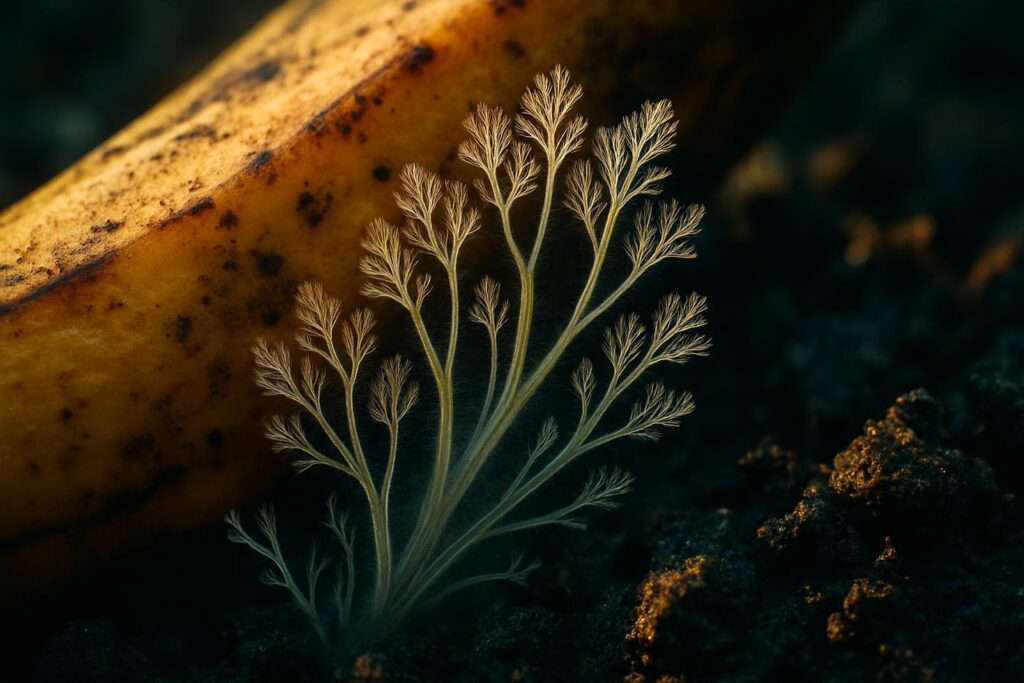
Buried whole, a banana peel feeds microbes for weeks — plants get nothing until decomposition is nearly complete.
A banana peel buried in garden soil is not a fertilizer. It is a food source for bacteria and fungi, and those microbes must finish their work before any plant can access the nutrients locked inside. That distinction changes everything about how the practice should be understood.
The moment a peel contacts moist soil, microbial communities move in. Bacteria target sugars first. Fungi work on the tougher structural fibers. Later arrivals process what the first wave left behind. This succession takes time — and during all of it, the potassium, magnesium, and phosphorus inside the peel remain bound inside organic material, unavailable to roots.
Why Microbial Succession Controls the Nutrient Timeline
Decomposition is not a single event. It is a relay. Early microbial colonizers consume the peel’s simple sugars rapidly. Later species — including fungi equipped to break down cellulose — handle the tougher structural material. this layered microbial relay determines when nutrients finally become plant-accessible, not when the peel was buried.
Chopping speeds that relay. Smaller pieces expose more interior surface, giving more microbial species simultaneous entry. Even so, meaningful nutrient release still takes weeks rather than days, regardless of piece size.
What Banana Peels Can and Cannot Do for Garden Soil
Banana peels are a modest organic amendment, not a substitute for balanced fertilization. Gardenia.net is direct on this point: peels are not a miracle feed, and raw burial delivers little nutritional benefit quickly. The Spruce frames them as useful mainly when composted or mulched — processed enough that decomposition is either complete or well underway before they enter the soil.
Brisbane City Council confirms the nutrient list is real — potassium, magnesium, sulfur, phosphorus, calcium — but nutrient presence does not equal nutrient availability. The verified mechanism requires decomposition to bridge that gap.
Claims that buried peels strengthen root systems, improve disease resistance, or measurably boost fruiting crops like tomatoes and roses are plausible given what potassium does biologically. But no controlled trial data in the available sources confirms that buried banana peels deliver those effects at garden scale, compared to other compost inputs.
The Practical Takeaway on Banana Peels and Soil Health
The peel feeds the microbes. The microbes feed the soil. That is a two-step process, and skipping the first step by expecting instant fertilization is where most expectations go wrong.
Composting or vermicomposting closes that gap. The biological work happens in the pile, not after burial. What reaches the plant then is already processed.
Frequently Asked Questions
How long does a buried banana peel take to break down?
Whole peels take considerably longer than chopped pieces; the sources describe the process as taking weeks, with meaningful nutrient release occurring only near the end of decomposition.
Are banana peels good fertilizer if buried directly?
Gardenia.net and The Spruce both say no — raw burial is slow, can attract pests, and contributes little nutrition until decomposition is complete. Composting is more reliable.
Which nutrients do banana peels contain?
Brisbane City Council lists potassium, magnesium, calcium, sulfur, and phosphorus — though availability depends entirely on decomposition.
Does chopping banana peels before burying them help?
Yes. Smaller pieces increase surface area, giving bacteria and fungi more simultaneous entry points and speeding the overall breakdown process.