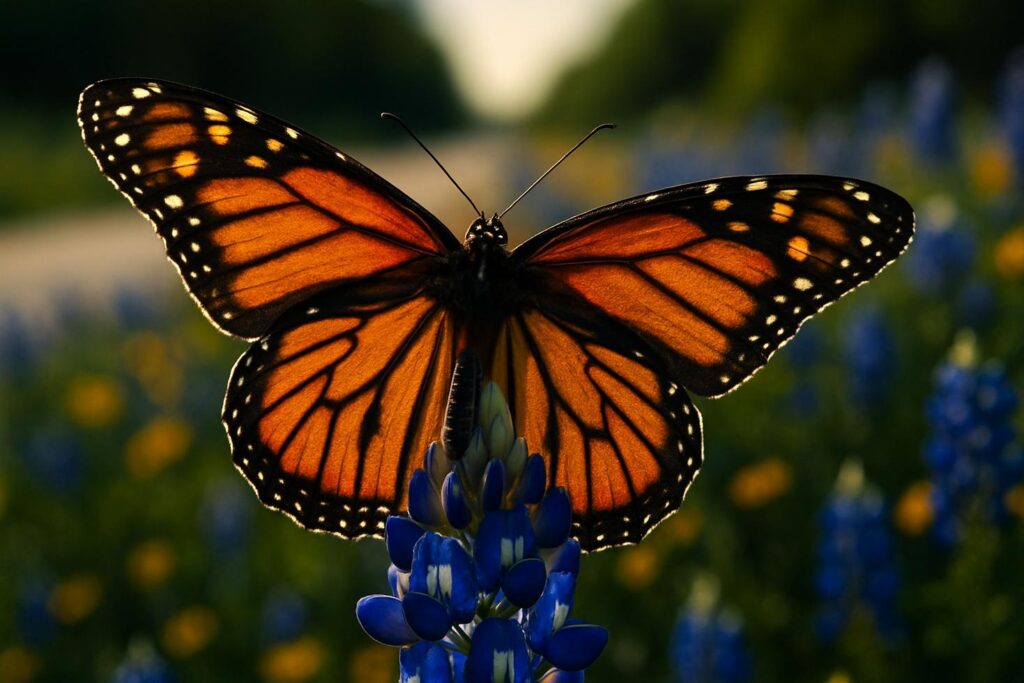
Texas manages 800,000 acres of highway right-of-way for wildflowers — seeded with 30,000 lbs of seed each year. The mower was always the variable.
Texas manages roughly 800,000 of its 1.1 million acres of highway right-of-way specifically for wildflowers, making the state’s road network one of the largest documented pollinator corridors in the United States. The mechanism is deceptively simple. It starts with not mowing.
The Texas Highway Department hired its first landscape architect in 1932 — not for aesthetics in the modern sense, but to preserve and encourage the native plants already colonizing roadside cuts and fills. By 1934, formal directives required delaying all mowing until spring and early summer wildflower seasons were over, with exceptions only where safety demanded it. That single rule has stayed in place for over 90 years.
How TxDOT’s Mowing Calendar Creates Habitat at Highway Scale
The core tool is timing. TxDOT delays mowing until wildflowers have set mature seed, then cuts twice a year — once after spring bloom, once after fall bloom. Nothing about that schedule is accidental.
A team of six broadcasts seed across the state annually using regionally appropriate native and introduced species mixes, targeting roughly 140 pure live seeds per square meter in standard conditions. The seed budget runs $50,000–$60,000 a year — modest for the acreage it covers.
The result is an unbroken chain of flowering strips along thousands of miles of Texas highways. For pollinators moving between isolated habitat patches, that chain functions as a travel corridor rather than a barrier.
What the 800,000-Acre Scale Means for Pollinators and Wildlife
TxDOT’s maintenance manual frames the program explicitly as developing roadside wildlife habitat, not just controlling vegetation. The Federal Highway Administration’s pollinator case study echoes that framing, noting that the wildflower program conserves water, controls erosion, and provides foraging and movement habitat for pollinators — including monarch butterflies using Texas as a migratory corridor.
Deferred mowing across hundreds of thousands of contiguous acres changes the math for species that need stepping stones between fragmented grassland patches. A single preserved prairie remnant may be too small and too isolated to sustain a pollinator population. A corridor stretching the width of the state is a different ecological proposition entirely.
The program also reduces costs. Native and adapted species require less mowing and irrigation than conventional turf, which is part of why the model has persisted since 1932 without requiring large annual budget increases.
Closing
What started as one landscape architect’s job description in 1932 became, over nine decades, one of the most extensively documented examples of highway right-of-way managed as functional habitat. The directive that launched it — don’t mow until the flowers have gone to seed — fits in a single sentence.
The road was built for movement. It turned out pollinators needed movement too.
Frequently Asked Questions
When did Texas start managing roadsides for wildflowers?
The Texas Highway Department hired a landscape architect specifically for wildflower preservation in 1932, with formal mowing-delay directives in place by 1934.
How much wildflower seed does TxDOT plant each year?
TxDOT purchases approximately 30,000 pounds of wildflower seed annually, spending roughly $50,000–$60,000 per year on seed alone.
How does delayed mowing help pollinators?
Withholding mowing until after bloom and seed-set preserves flowering plants through their full reproductive cycle, maintaining nectar sources and ensuring seed dispersal for the following season.
Is TxDOT’s wildflower program focused only on native species?
Native wildflowers and grasses are the primary ecological component, but TxDOT’s vegetation mixes also include introduced grasses and legumes alongside native species.