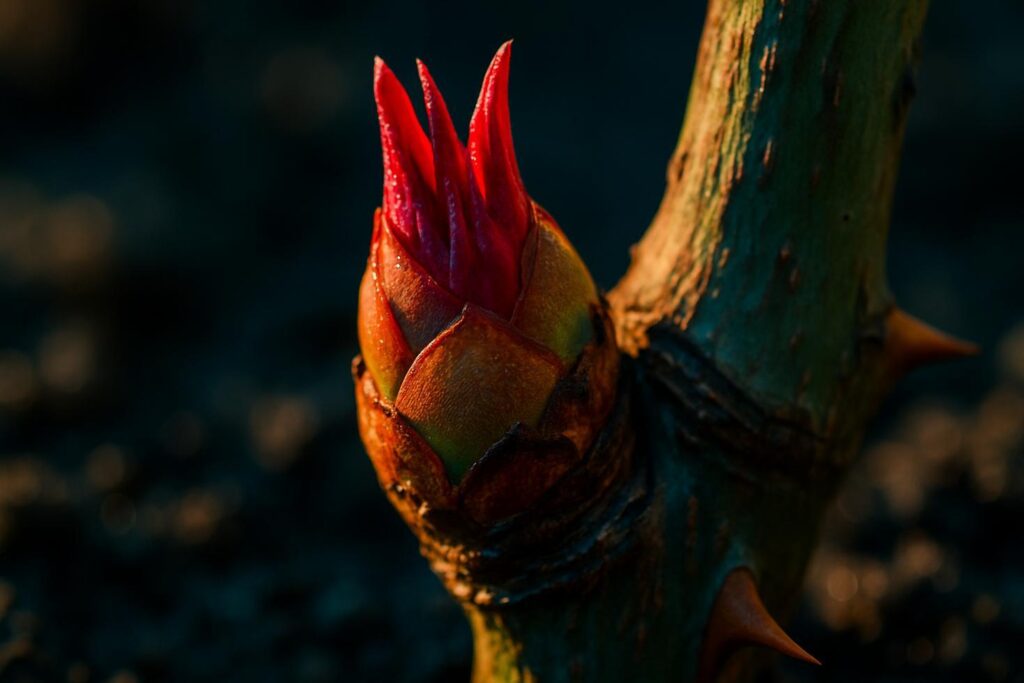
Soil heated to 25°C drove full flowering even when air stayed at 16°C. The carbohydrate reserves spent on frost-killed shoots never return.
Rosa hybrida doesn’t wake up from the top down — it wakes from the roots up. A peer-reviewed greenhouse study confirmed that heating only the root zone to 25°C was enough to increase bud break and flower production, even while air temperatures held at 16°C days and 11°C nights.
That single finding rewires how a gardener might picture dormancy. The stems and buds aren’t reading the season. The root zone is.
How Soil Temperature Controls Rosa Hybrida Dormancy and Bud Break
The root zone acts as the plant’s primary thermometer. When soil warmth crosses a threshold, dormant buds on the crown respond — not because the plant “decides” anything, but because temperature cues regulate the biochemical state of those buds directly.
The greenhouse study showed higher soil temperature increased the number of bottom breaks and promoted crown bud development. Root-zone warming, independent of air temperature, was sufficient to advance the plant through dormancy into active flower production.
Air temperature plays a secondary role. Higher air temperatures did cause earlier bud break after a major flowering peak, but shoot development afterward was not greatly affected by air temperature alone.
What Early Bud Break Costs the Plant in Carbohydrate Reserves
Winter dormancy in roses is also an energy conservation state. According to University of Alaska Fairbanks extension guidance, if temperatures warm during winter, roses resume growth and use up their stored reserves.
Those reserves — carbohydrates accumulated through the previous growing season — are the fuel that powers new shoots. Frost damage to tender growth after premature resumption leaves the plant with depleted reserves and no mechanism to recover them before true spring arrives.
New Mexico State University extension guidance notes that unseasonable spring frosts can damage tender growth, which is precisely the scenario where reserve depletion becomes consequential. The plant doesn’t get a second supply of fuel. It simply starts the real growing season running short.
Closing
Underground, a temperature-driven mechanism is making high-stakes resource decisions months before a single bud is visible. The soil warms, the roots respond, and the economy of the plant shifts.
When the timing is right, that sequence produces a full spring flush. When a false warm spell intervenes, the same mechanism can spend reserves the plant won’t earn back.
Frequently Asked Questions
What temperature triggers rose bud break?
A greenhouse study found soil at 25°C drove bud break and flower production even when air temperatures stayed at 16°C days and 11°C nights.
Do air temperatures affect rose dormancy?
Higher air temperatures caused earlier bud break after peak flower production in greenhouse trials, but did not greatly affect subsequent shoot development.
What happens to a rose when warm weather breaks dormancy too early?
The rose consumes stored carbohydrate reserves to produce new shoots; if frost then damages that growth, those reserves are gone and cannot be replenished before true spring.
What temperatures keep roses in full dormancy?
Roses enter winter dormancy when night temperatures fall below 0°C and daytime temperatures stay below 10°C, per horticultural guidance.