A 15-point tariff gap — 35% for fruits, 50% for vegetables — turned a plant stalk into a legal fruit for exactly one court ruling.
On July 11, 1947, the U.S. Customs Court ruled in C. J. Tower & Sons v. United States that imported rhubarb should be classified as a fruit for tariff purposes — not because plant biology said so, but because culinary custom and dictionary definitions made the lower rate defensible. The stalk never changed. The duty schedule had everything to do with it.
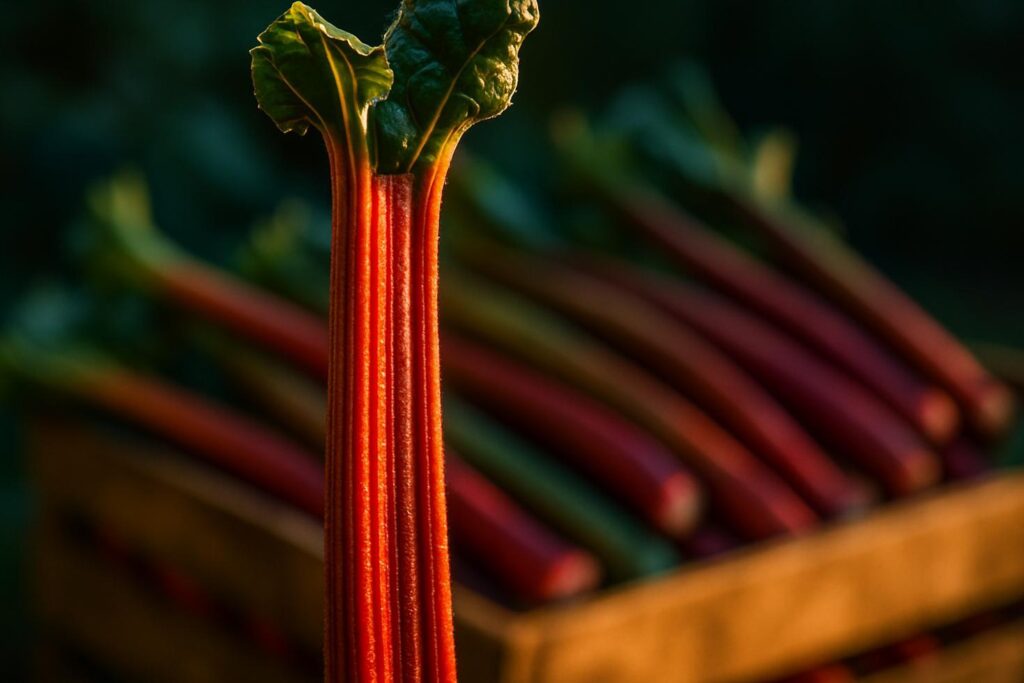
Rhubarb is a petiole — a leaf stem. It contains no seed-bearing structure. Botanically, calling it a fruit is a category error. But courts operate on trade meaning, not taxonomy, and that distinction opened a 15-percentage-point gap worth real money to importers.
How the 1947 Customs Court Actually Reasoned
The court did not summon a botanist. It consulted dictionaries. One definition it cited acknowledged that “fruit” is occasionally applied to rhubarb stalks, which was enough legal footing. Culinary context, not cellular structure, decided the case. Rhubarb ends up in pies. Pies contain fruit. Therefore, the court reasoned, trade meaning supports the fruit classification.
This is standard customs logic. Tariff classifications routinely follow commercial and ordinary meaning over scientific categorization, which is why the ruling was legally coherent even while being botanically absurd.
What the Ruling Did Not Do — and What Came After
The 1947 decision was narrow. It classified one shipment under one tariff schedule. It did not reclassify rhubarb for agriculture, food labeling, or any other regulatory purpose. The widely repeated claim that the USDA reclassified rhubarb that year is not supported by the court record.
More importantly, later tariff law moved rhubarb back to vegetables. The Harmonized System — the international framework governing modern import duties — lists rhubarb explicitly under Heading 0709 alongside other fresh or chilled vegetables. The 1947 ruling is a historical footnote, not a lasting reclassification.
The Tomato Parallel That Puts This in Context
Rhubarb’s moment has a famous predecessor. In 1893, the U.S. Supreme Court ruled in Nix v. Hedden that the tomato was a vegetable for tariff purposes — despite the tomato being botanically a fruit by every meaningful definition. The reasoning was identical: common usage overrides science when commerce is the question.
Law and botany share grocery store real estate. They do not share a definitions manual.
The rhubarb ruling lasted as long as the tariff schedule that created it. Once the financial gap closed and classification systems updated, the stalk went back to the vegetable column where biology had always put it. A calculator made it a fruit. A new calculator unmade it.
Science waited both times without changing its answer.
Frequently Asked Questions
What is the rhubarb fruit ruling from 1947?
C. J. Tower & Sons v. United States, 19 Cust. Ct. 12, classified imported Canadian rhubarb as a fruit under U.S. tariff law, using culinary custom and dictionary definitions rather than botanical criteria.
Why did the tariff classification matter financially?
Fruits were taxed at 35% and vegetables at 50%, creating a 15-percentage-point difference that directly reduced import costs for the importer.
Is rhubarb still legally classified as a fruit?
No. Modern tariff frameworks place rhubarb under Harmonized System Heading 0709, the category for fresh or chilled vegetables.
How is the rhubarb ruling similar to the tomato ruling?
Both courts prioritized common trade and culinary meaning over botanical fact to resolve a tariff dispute — the Supreme Court did the same with tomatoes in Nix v. Hedden (1893).