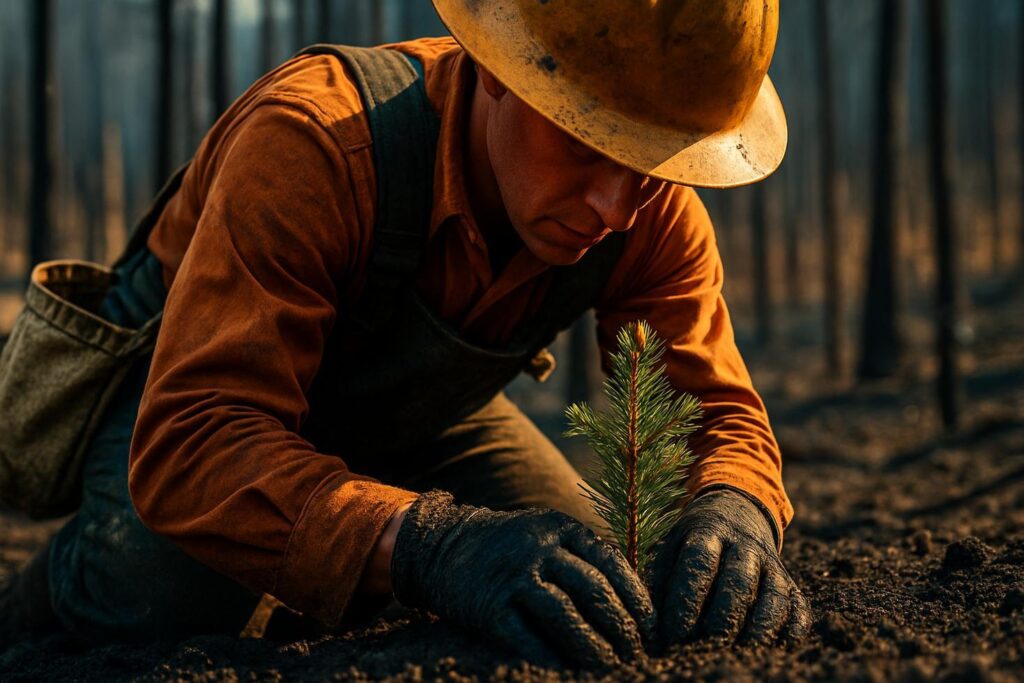
4 million acres of National Forest burn scars. A $30 million annual cap holding recovery to 6% per year. The REPLANT Act pushed that annual investment to roughly $123 million — nearly ten times more.
The National Forest System carries a reforestation backlog of approximately 4 million acres, most of it shaped by high-severity wildfire. That number isn’t a slow accumulation from decades past. More than 2.5 million acres burned with high severity in 2020 and 2021 alone, landing on top of roughly 1.5 million acres of already-identified, unaddressed need.
What made the backlog grow wasn’t just fire. It was a funding cap. Before November 15, 2021, the Reforestation Trust Fund was limited to $30 million annually — enough to address about 6% of identified wildfire-caused reforestation needs each year. The rest waited.
Quick facts:
– The reforestation backlog covers approximately 4 million acres of National Forest land
– A $30 million annual cap held recovery to roughly 6% of verified need before 2021
– The REPLANT Act, enacted November 15, 2021, removed that cap entirely
– Annual reforestation investment rose to roughly $123 million on average after REPLANT
– Annual replanting is scaling from 60,000 acres to a target of 400,000 acres
Why High-Severity Wildfire Makes Natural Regeneration Fail
Not all burned forest recovers on its own. High-severity fire kills the mature seed trees that would otherwise drop seeds and restart the growth cycle. Wind carries seeds only so far. bare, sun-baked soil rejects arriving seeds before they can establish. In forests like the Okanogan-Wenatchee in Washington or the Deschutes in Oregon, the window for successful replanting after severe fire is narrow. Miss it, and shrub fields and erosion replace what was forest.
What the REPLANT Act Actually Changed
The REPLANT Act — enacted as Section 40804(b) of the Infrastructure Investment and Jobs Act — removed the Reforestation Trust Fund’s annual cap. The Forest Service and USDA announced a goal of planting more than 1 billion trees over a decade and eliminating the backlog within 10 years. Reaching that scale requires a fourfold increase in nursery seedling production and ramping annual replanting from 60,000 acres to 400,000 acres. In December 2023, USDA and American Forests announced a $20 million five-year agreement explicitly tied to the 4-million-acre backlog. Progress has been real: 360,000 acres were reforested after REPLANT became law, with over $100 million invested in reforestation in a single year.
Closing
The numbers behind the REPLANT Act tell a straightforward story. A cap held recovery to 6% per year while burn scars accumulated across millions of acres. Removing it pushed annual investment to roughly $123 million and opened a path to planting at nearly seven times the previous annual acreage. Whether nursery capacity, workforce, and multi-year funding hold at that scale will determine whether the 4-million-acre goal is met within the decade. The backlog didn’t build in a year. Neither will the forest.
Frequently Asked Questions
What is the National Forest reforestation backlog?
The backlog covers approximately 4 million acres of National Forest land where high-severity wildfire and other disturbances left ground that cannot recover without active replanting.
What did the REPLANT Act change about reforestation funding?
It removed the $30 million annual cap on the Reforestation Trust Fund, raising average annual investment to roughly $123 million.
Why can’t burned National Forest land just regenerate naturally?
High-severity fire kills seed trees and leaves bare, compacted soil where seeds cannot establish, requiring active planting within a narrow post-fire window.
How many acres per year is the Forest Service now targeting for reforestation?
The agency is scaling from 60,000 acres replanted annually before REPLANT to a target of 400,000 acres per year.