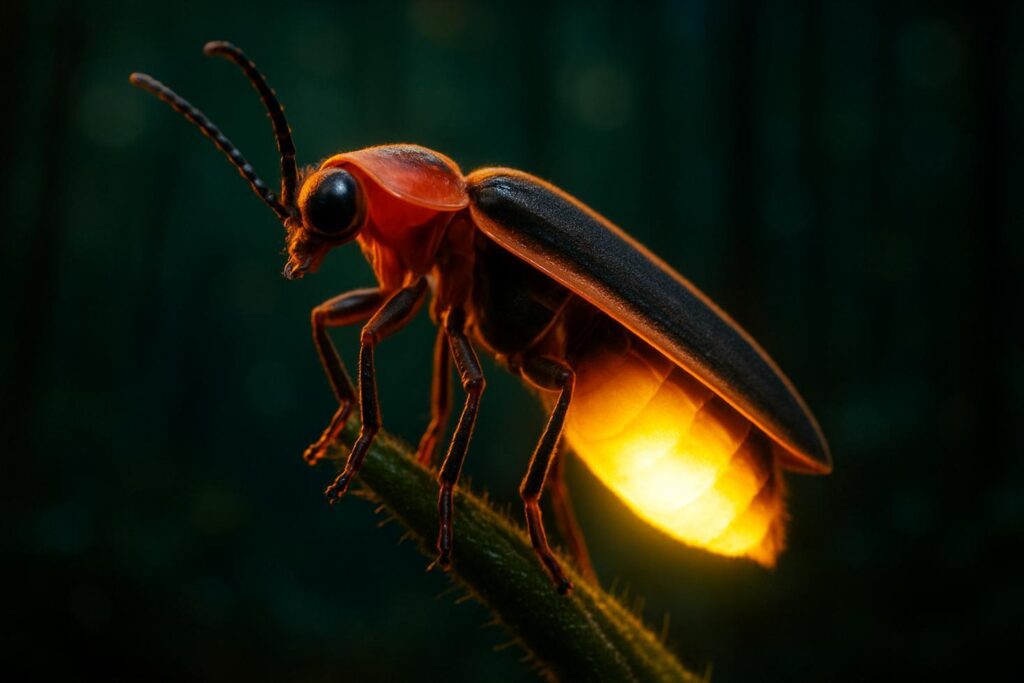
19 firefly species share the same Smoky Mountains forest — yet Photinus carolinus compresses its entire mating window into 8–10 nights, just 60–90 minutes after dark.
Elkmont’s synchronous firefly display depends on a mating signal so time-compressed that a single bad night of disturbance can erase an entire season’s reproductive opportunity. That biological reality is what drove the National Park Service to act. Since 2006, NPS has restricted vehicle access to Elkmont to an eight-day window of predicted peak activity each year — a lottery-based system designed to reduce trampling, limit artificial light, and let Photinus carolinus finish what it started.
The stakes inside those eight days are worth sitting with. An 8–10 night peak. Flashing that runs only 1 to 1.5 hours after full dark. No second season.
How the Synchronous Mating Signal Actually Works
Males fly above the forest floor and emit coordinated flash bursts in rising and falling waves. Females watch from the ground and answer with single return flashes. That exchange is species-specific — the right rhythm, matched to the right species — out of 19 sharing the same woods.
Stray flashlights introduce competing signals into that conversation. Heavy foot traffic collapses the dark, quiet understory where females wait. What visitation was disrupting was not scenery. It was the mechanism of reproduction itself.
What the NPS Lottery System at Elkmont Controls
Increased popularity produced traffic congestion and heavy visitation in the Elkmont area. NPS identified trampling, light disturbance, and broader habitat impacts as the primary concerns. The response was a controlled-access lottery for vehicle entry, capping crowd size and banning white light during the viewing window.
The eight-day access period is timed to predicted peak synchronous flashing activity each year. NPS describes it as a limited viewing opportunity rather than a general restriction, framing managed darkness as the condition that makes the display possible at all.
Closing
Photinus carolinus has no backup plan. The entire line between one generation and the next runs through a window shorter than most dinner parties. The NPS program at Elkmont is a rare case of a management system catching up to a biological deadline before the deadline passed.
The forest gets to finish what it started. That is the whole point.
Frequently Asked Questions
What firefly species creates the synchronous display at Elkmont?
Photinus carolinus is the synchronous species at Elkmont, one of at least 19 firefly species documented in Great Smoky Mountains National Park.
When does the Elkmont firefly display happen each year?
Peak synchronous flashing occurs over roughly 8–10 nights in late May to mid-June, with active flashing running 1–1.5 hours after full dark each night.
How does the NPS lottery system work at Elkmont?
Since 2006, NPS has limited vehicle access to an eight-day window of predicted peak activity through a lottery-based reservation system designed to reduce light disturbance and trampling.
Why does artificial light harm synchronous fireflies?
Males and females exchange species-specific flash patterns to find mates. Stray light disrupts that signal exchange, reducing the chance females can identify and respond to the correct male.