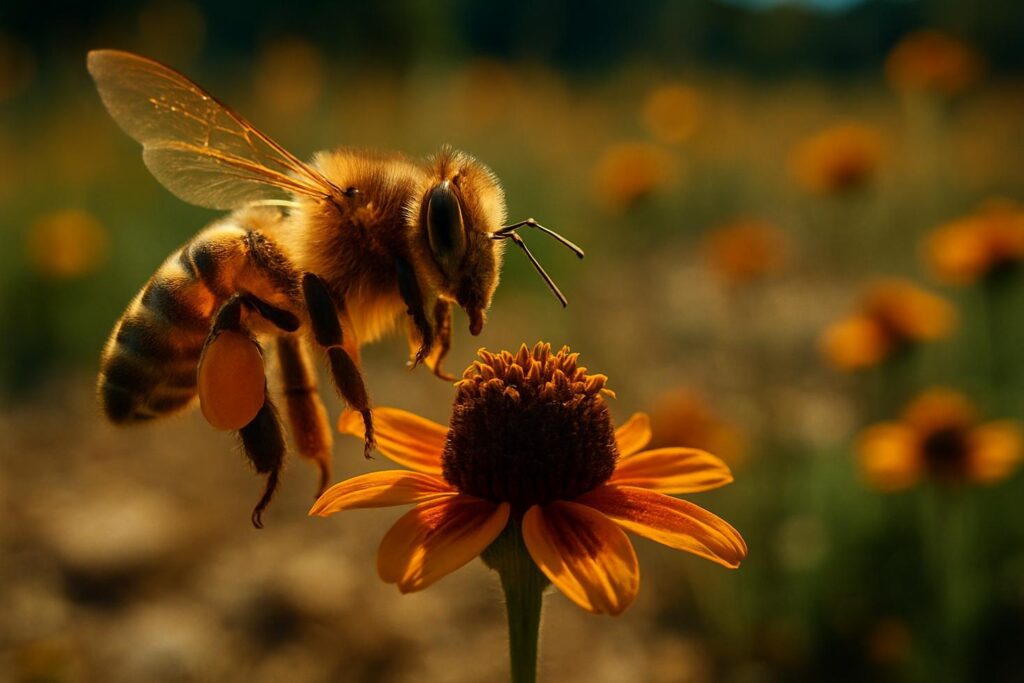
Six hives on 5 Texas acres qualify the land for agricultural tax rates — the same appraisal applied to working cattle ranches. The bees forage 3 miles out. The property line is irrelevant.
Texas Tax Code Section 23.51, amended by a 2012 law, explicitly classifies beekeeping as agricultural use — meaning land between 5 and 20 acres devoted to honey bee colonies qualifies for the same 1-d-1 open-space appraisal that governs cattle ranches and cropland. That single legal fact has quietly reshaped how small landholders think about a handful of hive boxes.
The mechanism is straightforward. Qualifying acreage gets taxed at productivity value rather than market value. On parcels where market value has climbed well above any realistic agricultural output, the gap between those two numbers translates directly into real savings — commonly exceeding $1,000 per year, and often reaching thousands more in higher-value counties.
What Texas Law Actually Requires for Bee-Based Ag Valuation
The 5-to-20-acre window is statutory, not advisory. Land outside that bracket cannot use the bee provision, and parcels inside HOA or municipal zones that prohibit hives or agricultural use do not qualify regardless of size.
The time requirement adds another layer. Qualifying land must have been used principally for agricultural purposes for at least five of the preceding seven years. For a parcel with no prior ag history, that means roughly five to six years of documented beekeeping activity before the reduced appraisal takes effect.
County appraisal districts also set minimum colony counts tied to acreage: most Texas counties require at least 6 hives for the first 5 acres, adding roughly one colony per additional 2.5 acres up to 12 colonies at 20 acres. Many counties further require hives to remain onsite for at least 7 months of the year. Landowners who can’t manage colonies themselves have fueled a niche industry of professional beekeepers placing and maintaining hives specifically to satisfy these requirements.
One practical note: counties typically carve out one acre for the homesite. A landowner with exactly 5 acres total may need 6 to walk away with 5 qualifying open-space acres.
How Bee Foraging Range Multiplies the Reach of a Small Parcel
Honey bee colonies do not stay on their 5 acres. Workers forage 1 to 3 miles from the hive — a radius drawn from apicultural research, not the tax code itself. That range sweeps across an area vastly larger than any qualifying parcel.
The result is that managed pollination extends well beyond property boundaries, reaching neighboring gardens, wild meadows, roadsides, and orchards that no one planted for bees. Increased colony density raises the total number of foraging workers visiting flowers per unit time, which generally boosts seed and fruit set for insect-pollinated plants.
Direct ecological measurements tied specifically to the Texas tax policy don’t exist in the policy literature. The documented effects remain economic. But the biology is not in dispute.
Closing
A few hive boxes on a modest Texas parcel connect two things that don’t usually appear in the same sentence: a property tax filing and a pollination radius measured in miles. The law has been on the books since 2012. The bees were already doing the work.
The smallest ranch, it turns out, can cast a very long shadow.
Frequently Asked Questions
Does Texas really treat beekeeping the same as cattle ranching for property taxes?
Yes. Both fall under the same 1-d-1 open-space agricultural appraisal in Tax Code Section 23.51, taxing qualifying land at productivity value rather than market value.
How many hives are needed to qualify for ag valuation in Texas?
Most Texas counties require at least 6 colonies for the first 5 acres, with roughly one additional colony per 2.5 acres beyond that.
How long does it take before the tax savings kick in?
For land with no prior agricultural history, landowners typically need five years of documented qualifying use before the reduced appraisal applies, meaning savings begin around year six.
Can a landowner hire someone else to manage the bees and still qualify?
Yes. The qualification is tied to how the land is used, not who manages the colonies, so professional beekeepers can place and maintain hives on an owner’s property to satisfy the requirement.