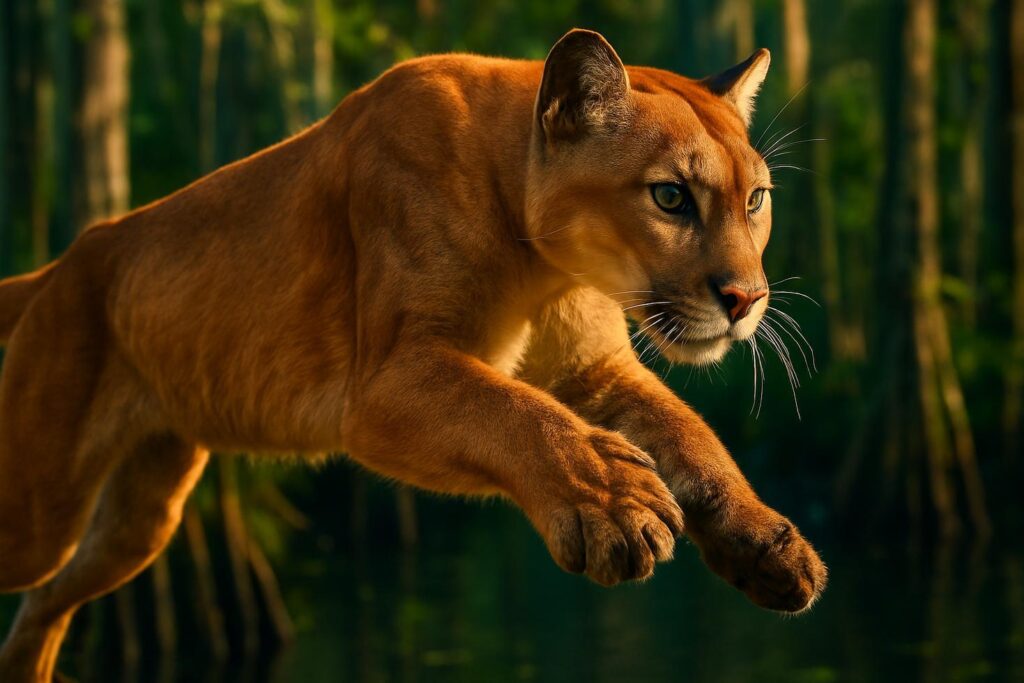
8 Texas females released in 1995. A population of 20–30 inbred cats climbed past 200. The bloodline didn’t just survive — it rebuilt itself.
In 1995, wildlife managers released eight female Texas pumas into south Florida, crossing them with a Florida panther population so genetically depleted it numbered roughly 20–30 individuals. The results reshaped what large carnivore recovery can look like. Florida panthers had been breeding in a closed loop for so long that kittens arrived with heart defects, kinked tails, and compromised immune systems — the physical signatures of a collapsed gene pool.
The eight females were released between March and July 1995, in pairs, across four to five locations within the panthers’ known south Florida range. The two bloodlines crossed, and the biology responded. Litter survival improved. Physical defects declined. The population climbed past 200 animals.
What Made the Florida Panther’s Genetic Situation So Dangerous
By the time managers acted, the panther population wasn’t just small — it was genetically isolated. Decades of inbreeding had concentrated harmful recessive traits until they became visible in nearly every litter. Heart defects, kinked tails, immune dysfunction were appearing at rates that signaled the population was consuming itself from within. A gene pool of 20–30 animals is less a pool than a puddle, with nowhere for diversity to come from naturally.
The intervention drew its authority from the federal Endangered Species Act. The subspecies chosen as donors — Texas pumas (Puma concolor stanleyana) — were the closest wild relatives available and had demonstrated reproductive fitness in comparable habitat.
How 36 Highway Underpasses Kept a Recovered Population Alive
Genetics solved one problem. Geography created another. Interstate 75 cuts directly through core panther territory in south Florida, and a highway at that scale doesn’t negotiate with wildlife. Road mortality had been killing recovered animals before they could reproduce and disperse.
Wildlife managers mapped panther movement corridors and built 36 concrete underpasses beneath I-75 — timed with the population’s recovery rather than after further losses accumulated. Cameras installed inside the tunnels documented panthers using them regularly at night. A population that survived genetic collapse still needed the landscape to function as connected habitat, not a series of isolated fragments divided by asphalt.
Frequently Asked Questions
How many Florida panthers were left before the 1995 intervention?
Estimates put the population at roughly 20–30 individuals in the wild in the early to mid-1990s, all in south Florida.
Why were Texas pumas chosen for the genetic rescue?
Texas pumas (Puma concolor stanleyana) were the closest wild relatives of the Florida panther and were selected under the federal Endangered Species Act recovery framework.
Did the genetic rescue actually reduce physical defects in panthers?
Yes. After the Texas females interbred with Florida panthers, litter survival improved and the rate of inbreeding-related defects — including heart abnormalities and kinked tails — declined.
What are the wildlife underpasses under Interstate 75 for?
The 36 underpasses allow panthers to cross beneath one of Florida’s busiest highways, reducing road mortality and maintaining connected habitat across the recovery range.