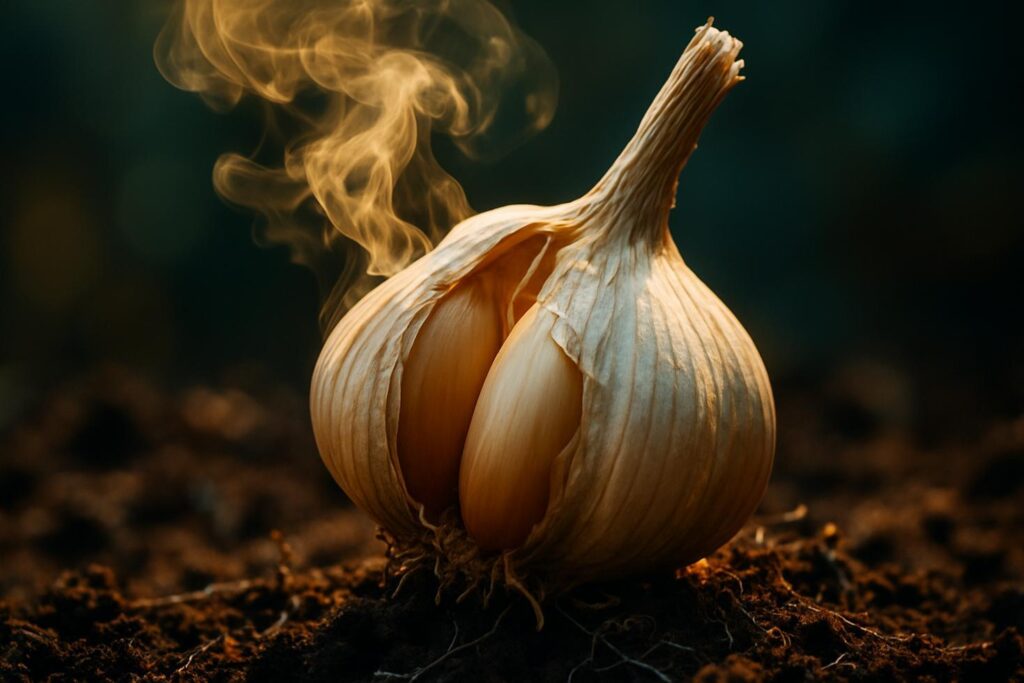
Garlic releases real sulfur compounds into water — but a 2022 Frontiers in Plant Science meta-analysis found zero statistically significant effect on plant biomass, chlorophyll, or yield in unstressed plants.
A 2022 peer-reviewed meta-analysis published in Frontiers in Plant Science found no measurable benefit to plant growth from garlic-based preparations applied to healthy plants. That finding cuts against one of the more persistent ideas circulating in plant care communities — that steeping garlic in water creates something close to a root-growth tonic.
The chemistry is genuinely interesting. Garlic does release sulfur compounds, including allicin, into water. But a compound doing something detectable in a flask is not the same as that compound improving what happens in a pot of living soil.
What the 2022 Meta-Analysis Actually Measured
The Frontiers in Plant Science study pulled together multiple garlic-biopreparation trials and found the same result across them: no statistically significant movement in biomass, chlorophyll content, or yield when garlic preparations were applied to plants not already under stress. Not a marginal effect. Not a trend. Zero.
University of Maine Extension research echoes this. While garlic itself contains some nutrients plants use, the dilution in water makes meaningful transfer functionally impossible at any practical application rate.
How Garlic Compounds Interact with Soil Microbes
Soil is not inert. A single teaspoon holds billions of microbes that form working partnerships with roots — helping absorb minerals, regulate moisture, and suppress pathogens. These relationships took an enormous stretch of evolutionary time to establish.
At low, targeted doses, garlic’s sulfur compounds may deter some pests as a foliar spray. At higher concentrations, those same compounds suppress the microbial networks roots depend on for actual nutrient uptake. The application intended to help quietly degrades the system already doing the work.
What Verified Research Does Suggest for Root Support
If the goal is root development or soil health, the sources with institutional backing point elsewhere. University of Maine Extension recommends manure tea, bone meal, or fish emulsion over garlic water — inputs with documented nutrient profiles rather than anecdotal trail results.
The informal claims circulating online — 35% faster root establishment, specific dilution ratios, weekly drenches — come from unverified trial videos with no peer-reviewed or institutional support. Those figures have no confirmed source in any research literature.
Garlic is a remarkable plant. The sulfur chemistry is real, and the pest-deterrent angle at low doses has some footing. What it doesn’t have is evidence of a growth benefit for healthy, unstressed plants. The soil was already doing that work — through biology, not a kitchen infusion.
Frequently Asked Questions
Does garlic water help plants grow faster?
No. A 2022 Frontiers in Plant Science meta-analysis found no statistically significant effect on plant biomass, chlorophyll, or yield in unstressed plants.
Can garlic water harm plants?
At high concentrations, garlic’s sulfur compounds disrupt soil microbiology, which can undermine the root partnerships plants rely on for nutrient uptake.
Is garlic water a natural fertilizer?
No. University of Maine Extension notes garlic contains some plant nutrients, but the concentration in steeped water is too dilute to meet plant nutritional needs.
What does garlic water actually do?
At low doses applied as a foliar spray, volatile sulfur compounds may deter some pests. That is the only mechanism the verified sources support.