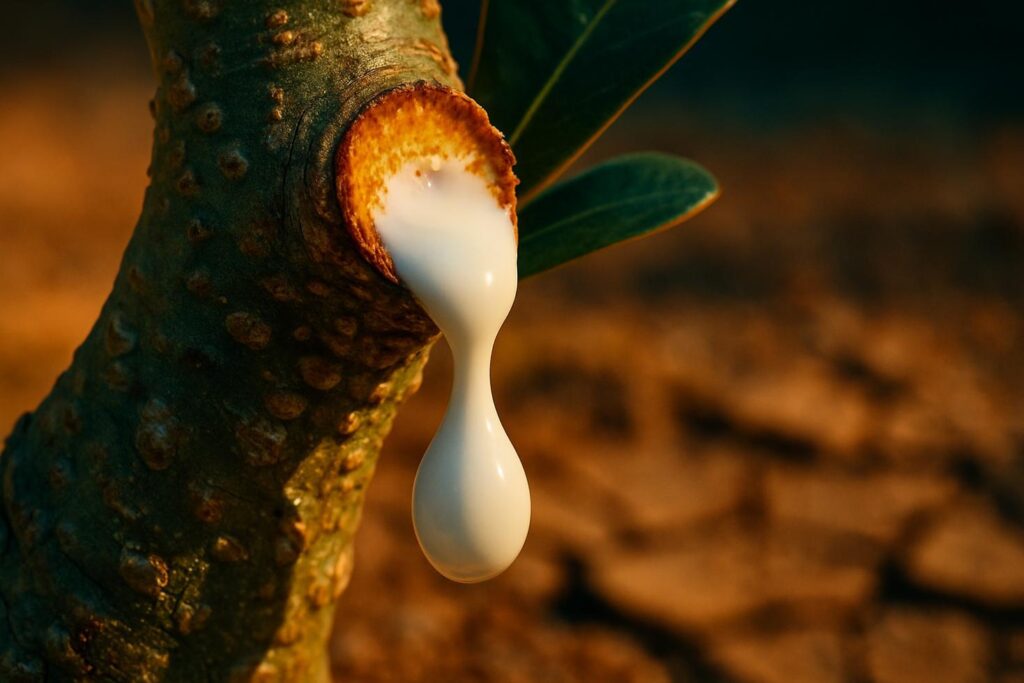
Desert rose latex floods a wound in seconds — cardenolides lock onto the same sodium-potassium pumps that keep animal hearts beating. That flower is running a chemical defense system.
Adenium species exude a sticky milky latex from their laticifer cells immediately after any mechanical wounding or herbivory. That response is not slow. Latex floods the wound site before most small insects finish a first bite. The desert rose belongs to Apocynaceae, a plant family where this chemistry is the baseline, not the exception.
The latex does two distinct jobs at once. It is physically sticky enough to trap or glue the mouthparts of insects at the wound site. And it carries cardenolides — cardiac glycosides that bind to the sodium-potassium pumps running every muscle contraction and nerve signal in an animal’s body.
How Desert Rose Latex Works as a Physical Defense
Latex exudation in Apocynaceae is an immediate barrier response. When tissue tears, the pressurized laticifer network releases fluid directly at the wound. Sticky latex gluing herbivore mouthparts shut is documented across the family as a first line of defense, buying time before slower induced defenses activate. The physical and chemical mechanisms work together rather than in sequence.
How Cardenolides Disrupt Animal Biology
Cardenolides are the chemical agents in the latex. They work by binding to and inhibiting the sodium-potassium ATPase pumps that maintain ion gradients across cell membranes. Those gradients are not optional — every heartbeat and nerve impulse depends on them firing in sequence. When the pumps are blocked, electrical signaling misfires. In small insects, this can cause immobilization. The general toxicology for Apocynaceae latex is consistent with gastrointestinal and cardiac effects in animals, though specific dose thresholds for Adenium have not been quantified in the available research.
Desert Rose Within the Apocynaceae Defense Lineage
Oleander, milkweed, and desert rose share this molecular arsenal. The family’s reliance on latex-borne cardenolides and other toxic compounds is well established in the toxicological literature. The latex can also contain defensive enzymes and proteins alongside the cardenolides, adding layers to the defense system. This is a lineage-wide chemical strategy, not an individual adaptation unique to Adenium.
The prettiest things in arid landscapes are rarely the most defenseless. Desert rose has been running this two-part trap — physical and chemical, simultaneous — long before anyone thought to put it in a pot.
Frequently Asked Questions
What is the milky sap that comes out of a desert rose when cut?
It is latex stored in specialized laticifer cells throughout the plant. It is released immediately at any wound site as a defense response.
Are cardenolides in desert rose dangerous to animals?
Cardenolides are toxic compounds known to disrupt cardiac and nerve function in animals via sodium-potassium pump inhibition. Specific dose data for Adenium in pets has not been quantified in current research.
Does cultivated desert rose still produce toxic latex?
Cardenolide production is part of Adenium’s inherited defense chemistry. Greenhouse cultivation does not eliminate these defenses, though no study has directly compared concentrations between wild and cultivated plants.
What plant family does desert rose belong to?
Adenium belongs to Apocynaceae, a family that includes oleander and milkweed — all known for latex-borne chemical defenses including cardenolides.