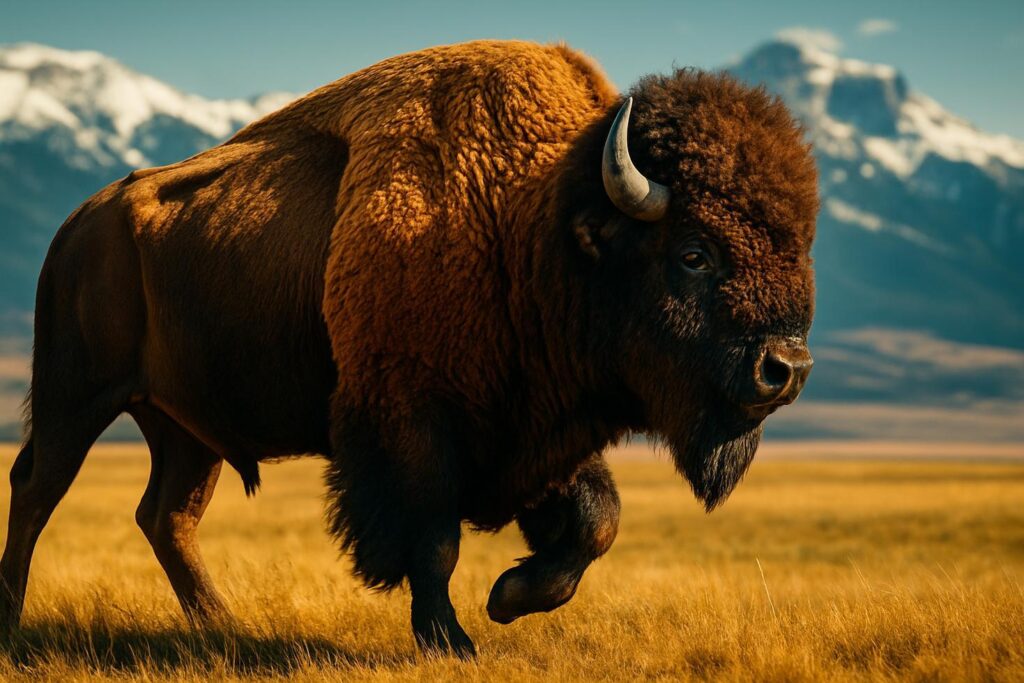
88 bison from Elk Island, Alberta — direct descendants of the last Blackfeet wild herd captured in 1873 — walked back onto tribal land in 2016. Tribal governance moved when federal timelines could not.
In 2016, the Blackfeet Nation reintroduced 88 plains bison to tribal lands in Montana, ending a 125-year absence confirmed by the National Park Service. The animals came from Elk Island National Park in Alberta — described in a 2023 report as direct descendants of the Blackfeet’s last wild herd, captured in 1873 and held in a kind of genetic custody ever since. That lineage made the return something more specific than a wildlife project.
The Iinnii Initiative, launched in 2009 by leaders of the four nations of the Blackfoot Confederacy, built the framework that made this possible. It moved through tribal governance and the Buffalo Treaty of 2014 — a cross-border agreement signed by over 30 tribal nations and First Nations — rather than through federal land-management channels.
How the Iinnii Initiative Used Tribal Sovereignty to Move First
Federal bison restoration efforts had existed for years without producing a free-ranging herd on this landscape. The Iinnii Initiative worked differently. Partners included the Oakland Zoo, Wildlife Conservation Society, Inter-Tribal Buffalo Council, Blackfeet Community College, and the American Bison Society — a coalition assembled through tribal leadership, not federal mandate.
The Blackfeet Tribal Business Council later passed a resolution calling for the release of 20 mature buffalo and 5 calves into the Chief Mountain area, along with a formal memorandum of understanding with Glacier National Park. Tribal resolution driving federal park partnership reflects a deliberate inversion of the usual sequence.
The Department of the Interior’s 2020 Bison Conservation Initiative and Secretarial Order 3410 on bison and prairie grassland restoration formally aligned with what the Blackfeet Nation had already set in motion. DOI committed $1,500,000 in project funding for FY23–27.
What Free-Ranging Bison Are Expected to Do for Prairie Grassland
The NPS project profile describes the goal as establishing a wild, free-ranging herd that moves across reservation, park, and international boundaries — Blackfeet lands into Glacier, and seasonally into Canada. That movement pattern mirrors historic migration corridors.
The ecological logic behind bison restoration is well-documented. Bison hooves open compacted soil. Wallowing disturbs surface structure in ways that create seed beds. Waste feeds soil microbes. Large herbivores reshaping prairie structure mechanically is the core restoration mechanism the NPS and its partners are counting on, rather than passive grazing alone.
Historic bison populations once numbered around 30 million. By the 1870s, only several hundred remained after a century of overhunting. The 88 animals released in 2016 represent the beginning of a recovery still measured in decades.
Closing
The 2023 lineage report and the 2024 NPS profile together tell a consistent story: the animals that returned were not generic stock. They were the specific descendants of what was lost here. The initiative that returned them worked because tribal governance created a path that interagency coordination had not.
One herd. One treaty. One hundred and twenty-five years of waiting — and then a resolution, not a federal permit, opened the gate.
Frequently Asked Questions
What is the Iinnii Initiative?
The Iinnii Initiative is a Blackfoot Confederacy-led effort launched in 2009 to restore free-roaming bison across traditional Blackfoot territory in Montana and Alberta.
Where did the 88 reintroduced bison come from?
They came from Elk Island National Park in Alberta, Canada, and are described as direct descendants of the Blackfeet’s last wild herd, captured in 1873.
What is the Buffalo Treaty of 2014?
It is a cross-border agreement signed by over 30 tribal nations and First Nations establishing a shared framework for bison restoration across the U.S.–Canada border.
Is Glacier National Park involved in the bison restoration?
Yes. Both Glacier National Park and Waterton Lakes National Park are named active participants in the Iinnii Initiative in the 2024 NPS project profile.