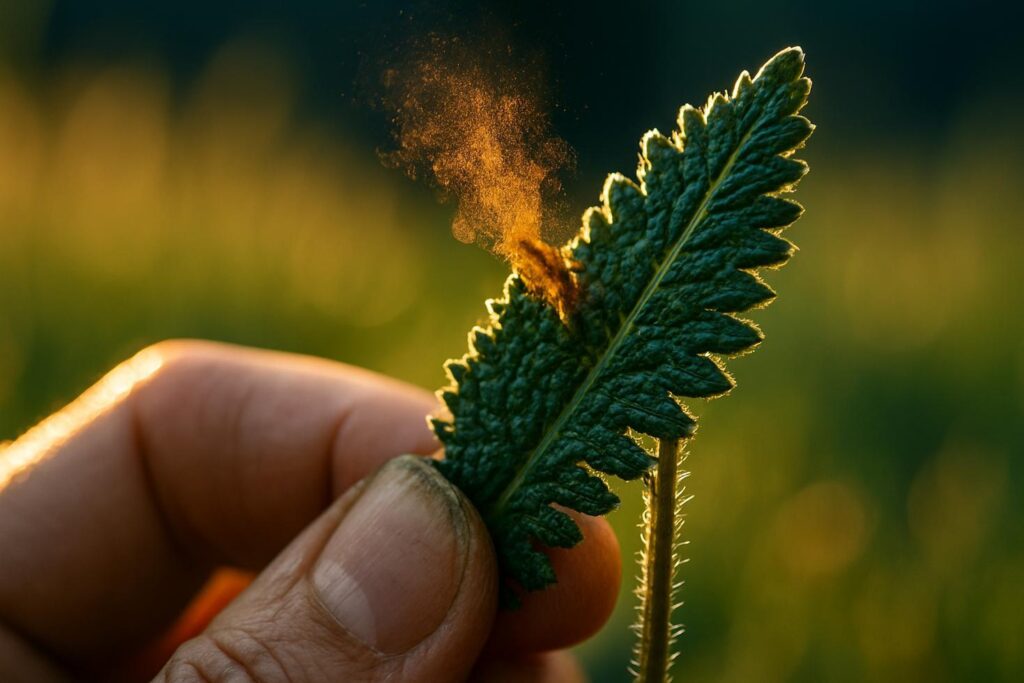
Yarrow’s alkaloid achilleine cut clotting time by 32% at just 0.5 mg per kilogram. Soldiers packed it into wounds for centuries. The chemistry was real before the lab existed.
Yarrow (Achillea millefolium) contains an alkaloid called achilleine that reduces blood clotting time by 32% at a dose of 0.5 mg per kilogram of body weight, according to experimental work by Miller in 1954. That number quietly explains something enormous. Dioscorides documented yarrow closing bleeding wounds in the 1st century CE, giving this plant nearly 1,900 years of continuous written medicinal history. Linnaeus made it permanent in 1753, folding the myth of Achilles directly into the genus name.
The plant is still growing in lawns right now, looking like nothing in particular.
How Achilleine and Yarrow’s Other Compounds Actually Stop Bleeding
Achilleine acts on the blood’s clotting cascade, accelerating the progression from injury to seal. It does not cause instant clotting — the Miller study shows a meaningful but dose-dependent reduction of roughly one-third. That is a measurable shift, not a miracle.
Yarrow doesn’t stop at one mechanism. Astringent tannins constrict blood vessels and surrounding tissue, adding a second layer of hemostatic action independent of the alkaloid. Volatile oils — including cineole, camphor, and azulene — contribute antimicrobial activity. A wound herb that slows bleeding and resists infection is a useful thing to carry.
The Achilles Legend and What Dioscorides Actually Recorded
The story of Achilles learning of yarrow’s powers from the centaur Chiron is mythological, not a documented battlefield protocol. Ancient primary texts are limited. What is documented: Dioscorides, writing in De Materia Medica in the 1st century CE, describes a plant he calls sideritis Achilleios whose ground foliage “closes bleeding wounds” and reduces hemorrhage. By his time, yarrow’s wound-closing reputation was already embedded in classical medicine under Achilles’ name.
Medieval herbals and leechbooks repeated the association across the following centuries. The epithet Herba militaris — the military herb — followed yarrow through Rome and into medieval Europe. Linnaeus, naming the genus in 1753, was codifying a connection already more than a millennium old in the written record.
Yarrow in Modern Lawns and First Aid
Achillea millefolium is a rhizomatous perennial that spreads easily through turf and disturbed soils. It stays low under mowing and keeps producing its finely divided leaves. Multiple herbal sources confirm that crushing or macerating fresh leaves and applying them directly to a shallow cut works as a crude styptic — the same tannins and achilleine are present in field-grown plants.
That said, yarrow’s presence in any given lawn depends on seed sources and local conditions. Not every lawn contains it.
The chemistry doesn’t care about the mythology. It works whether the plant is growing in Troy or a suburban yard.
Frequently Asked Questions
What does achilleine actually do to blood?
Achilleine accelerates the blood clotting cascade. At 0.5 mg per kilogram of body weight, Miller’s 1954 study measured a 32% reduction in clotting time.
Is the story of Achilles using yarrow historically documented?
No. The Achilles connection is mythological. The earliest written documentation of yarrow closing wounds is Dioscorides’ De Materia Medica from the 1st century CE.
Can yarrow leaves be applied directly to a cut?
Crushing fresh yarrow leaves and pressing them to a minor wound is described in multiple herbal sources as a styptic first-aid measure, combining achilleine, tannins, and antimicrobial volatile oils.
Why did Linnaeus name the genus Achillea?
Linnaeus named it in 1753 after the Greek legend of Achilles treating soldiers’ wounds with the plant, reflecting a connection already embedded in classical and medieval herbal literature.