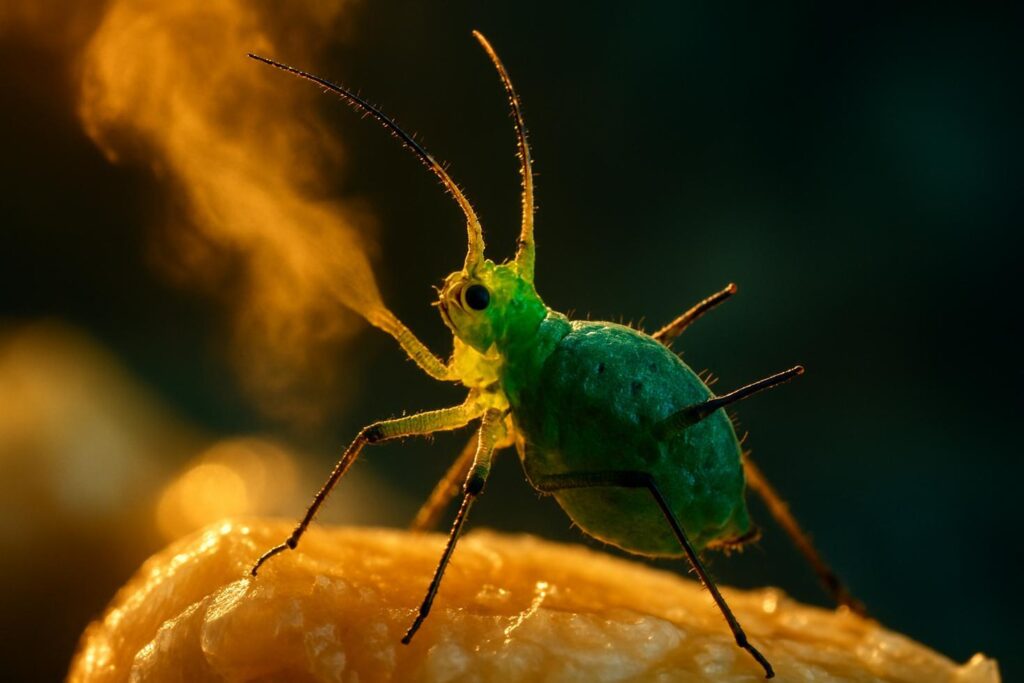
Limonene scored RI 15 in peer-reviewed aphid tests — far below the RI 70 threshold for real repellency. Garlic’s diallyl disulfide cleared that bar. Citrus gets the credit. Sulfur does the work.
In controlled laboratory testing, limonene — the dominant volatile in orange and lemon peel — registered a repellency index of 15.0 against vegetable aphids, a score the study’s authors categorized as no repellency. The citrus compound most associated with natural pest control barely moved the needle. What actually worked smelled nothing like a cleaning spray.
The study tested 12 pure plant compounds against two Myzus persicae clones and Macrosiphum euphorbiae. Only 5 of those 12 cleared the RI ≥ 70 threshold against every aphid species tested.
What the Repellency Index Numbers Actually Show
The RI scale in this research treated any score below 70 as absence of repellency. Limonene, at 15.0, sat near the bottom of the ranking. Lemon essential oil as a full extract performed better — RI 37.8 — but still failed to reach the threshold.
Other compounds in the same study, including citral, geraniol, farnesol, and (Z)-jasmone, showed stronger aphid-deterrent activity. Citral and geraniol clearing the repellency threshold demonstrates that not all plant volatiles behave alike, even those derived from citrus-family sources.
Why Garlic and Onion Volatiles Clear the Bar Limonene Cannot
A separate peer-reviewed study using Y-tube olfactometer tests and cage trials with Aphis gossypii identified two specific sulfur compounds as behaviorally active: diallyl disulfide from garlic and propyl disulfide from onion. Both compounds altered aphid settling behavior under controlled conditions.
The mechanism is volatile-mediated: sulfur molecules disrupt aphid olfactory orientation, interfering with the chemical signals aphids use to locate host plants. Limonene’s molecular structure does not appear to trigger the same response at comparable concentrations.
This distinction matters for anyone interpreting gardening advice. The reputation citrus has built as an insect deterrent does not transfer automatically to aphid behavior.
Frequently Asked Questions
Does orange peel repel aphids in the garden?
Peer-reviewed testing found limonene, the main volatile in orange peel, scored RI 15 — a value the study authors classified as no repellency against vegetable aphids.
What plant compound actually repels aphids in controlled tests?
Diallyl disulfide from garlic and propyl disulfide from onion both demonstrated repellent activity against Aphis gossypii in cage trials and Y-tube olfactometer experiments.
How is the repellency index threshold defined in aphid essential oil studies?
The study used RI ≥ 70 as the cutoff for repellency; scores below that value indicated absence of repellent effect.
Are any citrus-derived compounds effective against aphids?
Citral and geraniol, which appear in some citrus-family plants, showed stronger activity than limonene in the same study, though they are not the compounds responsible for a typical orange-peel scent.