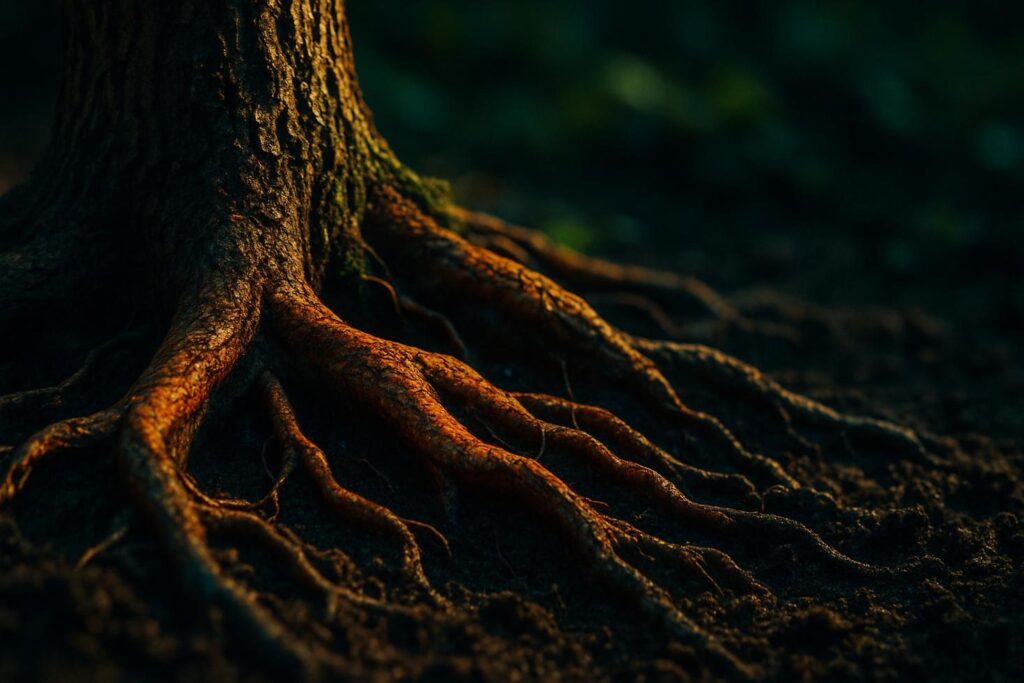
Black walnut’s toxic zone averages 50–60 feet from the trunk — yet unsterilized soil destroys 93.93% of juglone within just 5 days.
Black walnut trees release juglone, a chemical compound that suppresses or kills nearby plants, through their roots, leaves, and rain-washed surface debris. The average injury zone around a mature tree runs 50 to 60 feet from the trunk, though plants as far as 80 feet away have also been damaged. What rarely gets discussed is how aggressively living soil fights back.
In controlled experiments, only 6.07% of added juglone remained in unsterilized soil after 5 days. The same test in sterilized soil left 42.92% behind. Microbial communities aren’t a passive background condition — they’re the primary mechanism driving juglone breakdown.
How the Juglone Toxic Zone Actually Works
The injury radius is not a fixed circle. It reflects where roots reach and where water carries leachate — two variables that shift with soil type, slope, and tree age. Juglone concentrates most heavily in the top 0–8 cm of topsoil, with measured values reaching up to 3.9–5 μg/g in that layer.
Species sensitivity determines actual harm, not just proximity. Alley-cropping research found juglone concentrations beneath walnut rows exceeded the toxicity threshold for sensitive plants (10⁻⁷ M) but stayed below the inhibition threshold documented for maize and soybeans (10⁻⁵ M). A tomato and a corn plant standing at the same distance can have completely different outcomes.
What Soil Microbes Do to Juglone — and How Fast
Researchers isolated Pseudomonas J1 directly from soil beneath black walnut. This bacterium degrades juglone and related aromatic compounds rapidly, which explains why biologically rich soil consistently outperforms sterile soil in breakdown tests. The microbes aren’t incidental — they evolved alongside the tree.
After tree removal, Iowa State University Extension reports most juglone is gone within a few months, with replanting generally safe the following growing season. Ask Extension places breakdown at roughly 2–3 months. Poorly drained or compacted soils slow degradation considerably, with some horticultural guidance citing persistence up to 2 years in those conditions.
The stump is the critical variable. If it remains, juglone can stay active for up to 5 years. Remove the stump, and well-aerated, organically rich soil resolves the problem in months.
Using Black Walnut Wood, Bark, and Leaves Safely
Fresh bark, leaves, nuts, and wood chips all carry active juglone and can injure sensitive plants when used as mulch. Walnut leaves break down in air, water, and bacterial action — composting them is viable. Bark requires a minimum of 6 months of composting before it’s considered safe, even for sensitive species.
The pattern is consistent: oxygen, water, and microbial life are the three conditions that collapse juglone fastest. Materials that block those conditions preserve the compound.
The ground beneath a black walnut has been running this chemistry for a long time. The tree builds the weapon; the soil keeps working to neutralize it. Neither process ever really stops.
Frequently Asked Questions
How far does black walnut juglone reach?
The average toxic zone from a mature black walnut is 50 to 60 feet, though injury has been reported up to 80 feet from the trunk.
How long does juglone stay in soil after a black walnut tree is removed?
In well-aerated soil, most juglone clears within a few months. If the stump remains, activity can persist for up to 5 years.
Do all plants die near a black walnut?
No. Sensitivity varies significantly by species. Maize and soybeans tolerate concentrations that damage more sensitive plants at the same distance.
Can black walnut wood chips be used as mulch safely?
Fresh wood chips and bark carry active juglone. Bark composted for a minimum of 6 months may be safe, even for sensitive species.