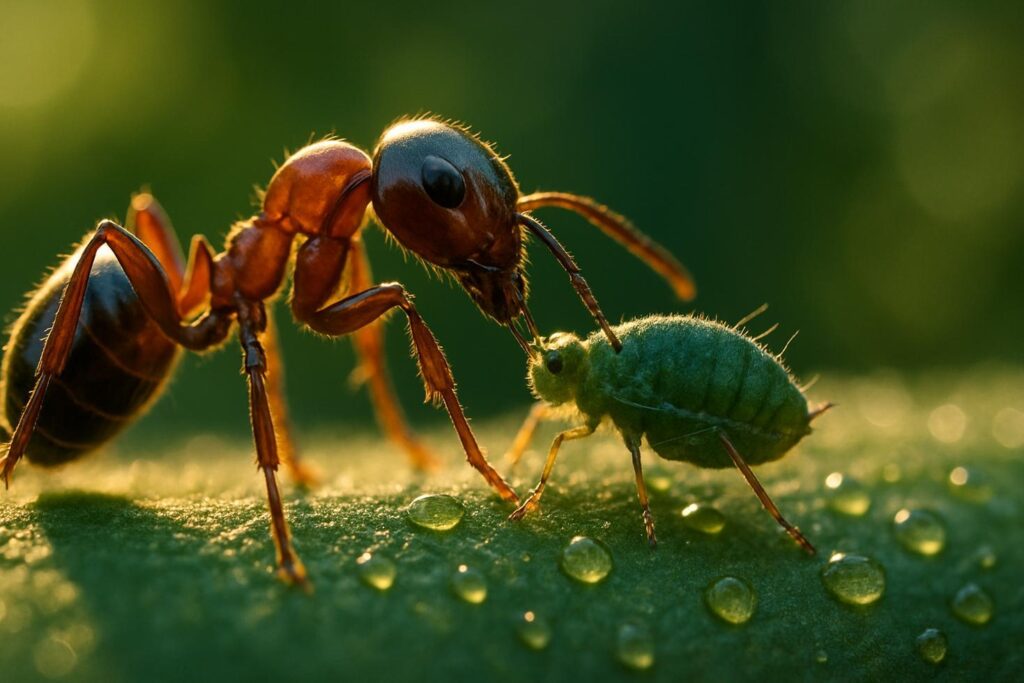
Ants stroke aphid abdomens with their antennae to trigger honeydew release — and gland chemicals may suppress aphid wing growth, keeping the herd grounded.
Worker ants actively manipulate aphids to produce food — a relationship so structured it functions as insect husbandry. What looks like two bugs sharing a stem is actually a multi-season operation involving chemical control, disease management, and winter storage.
The aphids aren’t passive partners. They consume sugar-rich plant phloem sap and excrete the excess sugars as honeydew. Ants exploit that biology by palpating aphid abdomens with their antennae, a behavior researchers describe as “milking.”
How Ants Trigger and Control Honeydew Production
The stroking behavior is not incidental. Ants direct aphids to the juiciest parts of a plant and tend them there, maximizing yield. Some ant species build physical shelters — described in the literature as “pastures” — around aphid colonies.
Chemical control adds another layer. Ant gland secretions may sabotage aphid wing growth, keeping colonies stationary and close to the nest. Ant footprint chemicals also appear to tranquilize or subdue aphid movement. The result is an aphid colony that stays put, producing honeydew in a location the ant controls.
How Ants Protect Aphid Colonies from Disease and Predators
Ants defend aphids against predators including ladybugs and lacewings. The protection extends to disease. One peer-reviewed study found that ants reduced lethal fungal infections caused by Pandora neoaphidis by quickly removing fungal-killed aphid bodies and grooming living aphids to remove infective conidia.
Active removal of infected individuals limits how far the pathogen spreads. Ants also quarantine diseased aphids from healthy ones. The stable, pathogen-reduced environment ants provide is significant enough that some aphids may forgo sexual reproduction entirely within it.
Ant-Aphid Mutualism Across Seasons: Winter Storage and Egg Transport
The operation doesn’t pause in winter. Ants carry aphid eggs into underground galleries during cold months and return living aphids to plants when they leaf out again. Some ants carry aphid eggs with them when founding new nests — seeding a honeydew supply at the colony’s start.
The mutualism is not purely cooperative. Ants may cull young aphids or individuals producing less honeydew. Some ants eat aphids alongside tending them. The relationship favors the ant colony’s needs, not the aphid’s.
This is insect husbandry built from chemistry and behavior, running across seasons without any conscious strategy on either side. Two sets of biological drives, locked into a system that has persisted across millions of years. The aphid never notices. The ant never stops.
Frequently Asked Questions
What is ant milking of aphids?
Ants stroke aphid abdomens with their antennae to stimulate the release of honeydew, a sugar-rich liquid aphids produce from excess plant sap.
Do ants really suppress aphid wings?
Ant gland chemicals may suppress wing development in nearby aphids, reducing dispersal and keeping colonies close to the nest, though this mechanism is still being studied.
How do ants protect aphid colonies in winter?
Ants move living aphids into underground shelters and carry aphid eggs with them, maintaining the colony through cold months and returning them to plants in spring.
Do ants ever harm the aphids they tend?
Yes — ants may eat young aphids or cull individuals that produce less honeydew, so the relationship serves ant colony needs rather than aphid welfare.