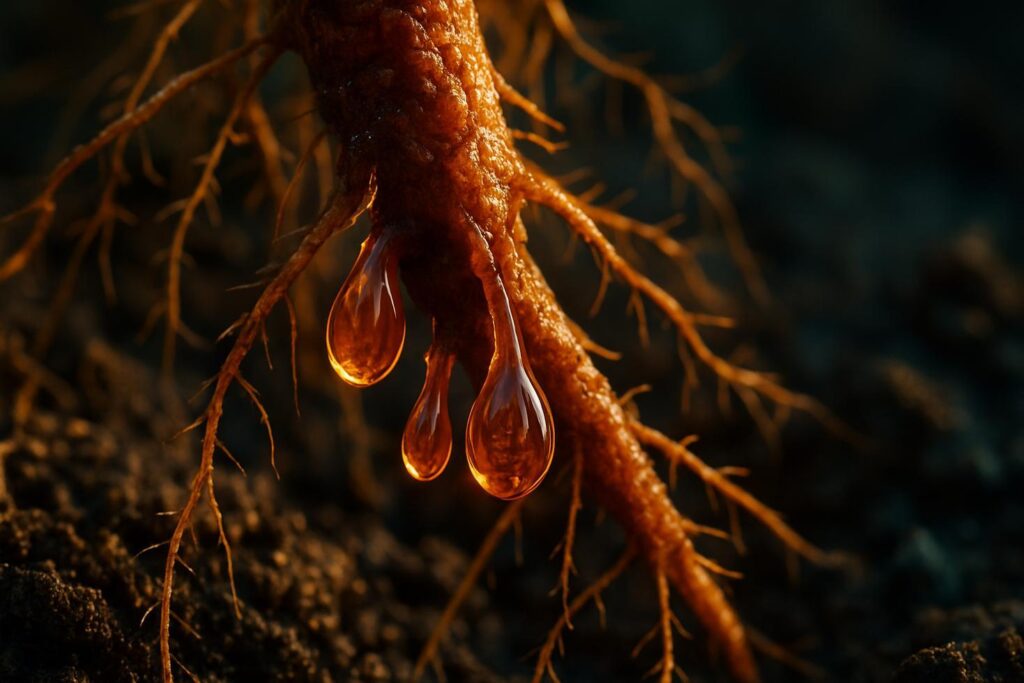
Marigold root tips hold 5 μmol/g of thiophene — 25 times the level in attached roots. Output climbs steadily from day 15 to day 36. The prettiest plant runs two chemical operations at once.
French marigold (Tagetes patula) roots produce sulfur-based compounds called thiophenes that kill nematodes, fungi, and bacteria on contact. That’s not gardening folklore — it’s documented chemistry with a paper trail running back to 1930s American field tests and a 1953 Dutch nematode study. The surprise is where the chemistry concentrates and how it grows over time.
Root tips hold the highest thiophene density in the whole plant. In detached roots cultured in vitro, concentration reached 5 μmol per gram fresh weight — 25 times what’s measured in roots still attached to the plant. And output isn’t fixed; it climbs steadily from 15 to 36 days after planting.
How Thiophenes in Marigold Roots Actually Kill Nematodes
Root-knot nematode larvae enter marigold roots. American field tests from the 1930s documented what happens next: the larvae typically fail to complete development or produce eggs. Active thiophene compounds were isolated and identified in the late 1950s and early 1960s, with α-terthienyl emerging as the key player.
One confirmed mechanism involves light activation. Thiophenes become toxic when exposed to UV radiation in the 300–400 nm wavelength range, a process proposed for killing nematodes, fungi, and bacteria in and around the rhizosphere. Thiophene content in roots appears regulated, at least partly, by auxin — transformed roots with different morphology showed different thiophene levels, and higher root branching correlated with lower thiophene concentration.
How Marigold Volatile Compounds Disrupt Pest Behavior Above Ground
The same chemical family responsible for marigold’s sharp scent also interferes with insect navigation. Field observations in tomato and chilli crops show reduced whitefly and aphid populations when marigold grows as a border crop.
The mechanism isn’t toxicity at distance — it’s signal disruption in host-finding behavior. Volatile thiophenes and terpenoids mask or scramble the chemical cues aphids, whiteflies, and thrips use to locate suitable hosts. The result is fewer landings and reduced egg-laying in nearby crops.
How Thiophene Output Changes as the Plant Grows
A rhizosphere study tracked thiophene release from marigold roots at two-to-five-day intervals between days 15 and 36 after planting. Release increased over time. The study’s data suggests this increase is passively controlled by resource availability — the plant grows larger, the root system expands, and more thiophene moves into the surrounding soil. There’s no evidence of neighbor-triggered or “targeted” output; the mechanism appears to be growth-scaled passive release.
The same study found indirect evidence that thiophene release negatively affected velvetleaf growth nearby, which points to genuine rhizosphere-level competitive chemistry.
The chemistry running through a marigold root tip has a history stretching back nearly a century of documented field observation. It scales up as the plant ages, concentrates where the root is most active, and operates on two fronts simultaneously. Most people notice the flower. The soil notices something else entirely.
Frequently Asked Questions
What compounds in marigold roots kill nematodes?
α-Terthienyl and related thiophenes are the primary nematicidal compounds, first isolated and identified in the late 1950s and early 1960s.
How long does it take for marigold roots to become effective against nematodes?
Thiophene output is measurable from day 15 and increases through at least day 36 after planting.
Do marigolds repel insects above ground as well?
Yes — volatile thiophenes and terpenoids disrupt host-finding behavior in aphids, whiteflies, and thrips, reducing egg-laying in neighboring crops.
Why are marigold root tips more potent than the rest of the root?
Thiophene concentration peaks at root tips; detached roots in vitro measured 25 times the thiophene level found in roots attached to the plant.