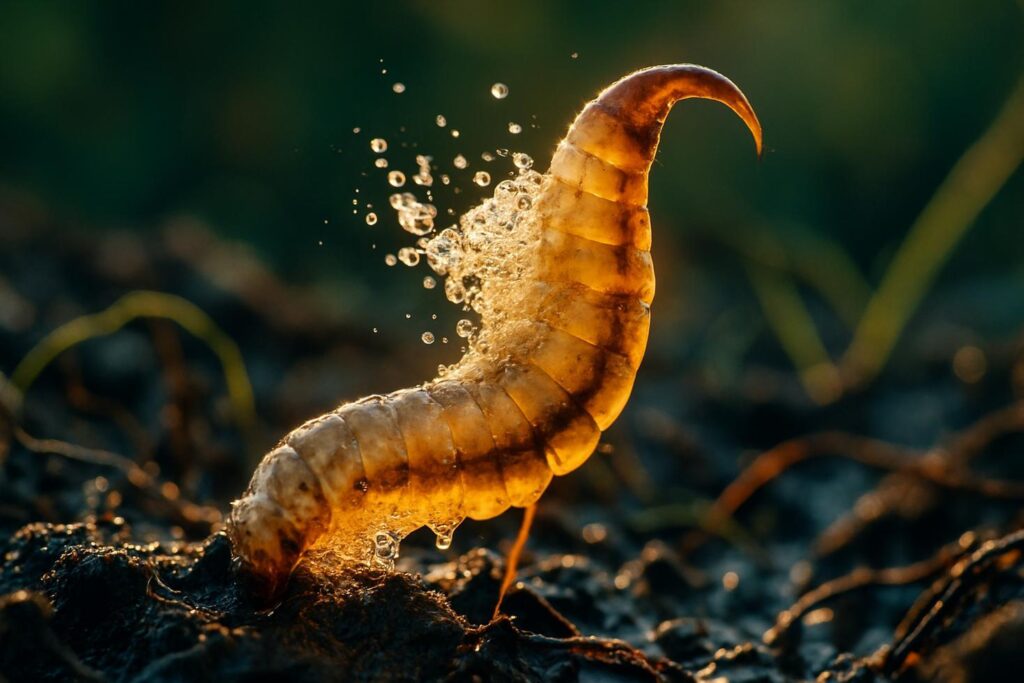
Hydrogen peroxide decomposes into water and oxygen on contact with soil — the same oxidizing reaction that releases oxygen also damages the cell membranes of fungus gnat larvae and soil fungi, but the oxygen window lasts only minutes before microbes break it down.
Hydrogen peroxide (H₂O₂) releases molecular oxygen directly at the root zone by decomposing into water and O₂ the moment it contacts soil enzymes and organic matter. That visible fizzing is real oxygen — and the chemistry doing the releasing is the same chemistry that makes the compound lethal to soft-bodied organisms in the soil. Two outcomes, one reaction.
Fungus gnat larvae (Bradysia spp.) and root rot pathogens share a preference for wet, low-aeration substrates — the same chronic saturation that cuts oxygen diffusion to roots. When hydrogen peroxide reaches that environment, its oxidizing action can damage cellular membranes and proteins in both larvae and fungal pathogens. Roots, meanwhile, get a brief oxygen pulse.
Brief is the operative word. Soil microorganisms and organic matter degrade hydrogen peroxide within minutes, returning oxygen levels to baseline almost immediately.
How Hydrogen Peroxide Kills Fungus Gnat Larvae and Soil Fungi
The biocide effect is not about the oxygen. Oxidative damage at the cellular membrane level is what kills soft-bodied larvae and fungal pathogens. Hydrogen peroxide crosses cell membranes and, in the presence of iron and other transition metals, generates hydroxyl radicals through Fenton chemistry — radicals that damage proteins, lipids, and DNA.
Consumer sources consistently list hydrogen peroxide as effective against fungus gnat larvae and soil fungi. Peer-reviewed, quantitative data on larval mortality thresholds in potting soil are sparse; most evidence is practical and anecdotal rather than from controlled mortality experiments.
What the Oxygen Release Actually Does — and Doesn’t Do — for Roots
Roots use oxygen for cellular respiration, producing ATP that powers active ion transport from soil into root cells. In waterlogged, hypoxic soil, that energy pathway stalls, and nutrient uptake drops with it.
A hydrogen peroxide drench introduces oxygen directly into water-filled pore spaces. The oxygen is real and the fizzing is evidence of it. But GardenMyths notes that the reaction is so short-lived that soil aeration returns to its previous state within minutes — the compound does not open new structural pores or reduce compaction in any lasting way. Physical amendments like perlite and mechanical aeration do that work instead.
Research on apple replant disease found that hydrogen peroxide treatments reduced pathogenic Fusarium populations and improved seedling growth and root antioxidant activity. A separate USDA ARS study on nasturtiums found no significant growth benefit under tested application rates. Results are dose- and context-dependent.
Closing
What hydrogen peroxide offers is a short-duration oxidative event — a window of elevated oxygen and a biocidal pulse, not a structural fix. The same chemistry that hands oxygen to roots takes it back in minutes. For gardeners navigating overwatered, gnat-infested containers, that window can matter. It just doesn’t stay open long.
Frequently Asked Questions
Does hydrogen peroxide kill fungus gnat larvae in soil?
Hobbyist sources and semi-technical guides report it can, via oxidative membrane damage, but controlled larval mortality studies under potting soil conditions are limited in the published literature.
How long does the oxygen from hydrogen peroxide last in soil?
Soil microbes and organic matter break hydrogen peroxide down within minutes, returning oxygen levels to their previous baseline quickly.
Can hydrogen peroxide fix compacted or waterlogged soil long-term?
No. The gas release is transient and does not structurally alter soil pore space; compaction requires physical amendments or mechanical aeration.
Does hydrogen peroxide harm beneficial soil microbes?
Yes — it is a broad-spectrum oxidant that can suppress both harmful pathogens and beneficial microbial populations, at least temporarily.