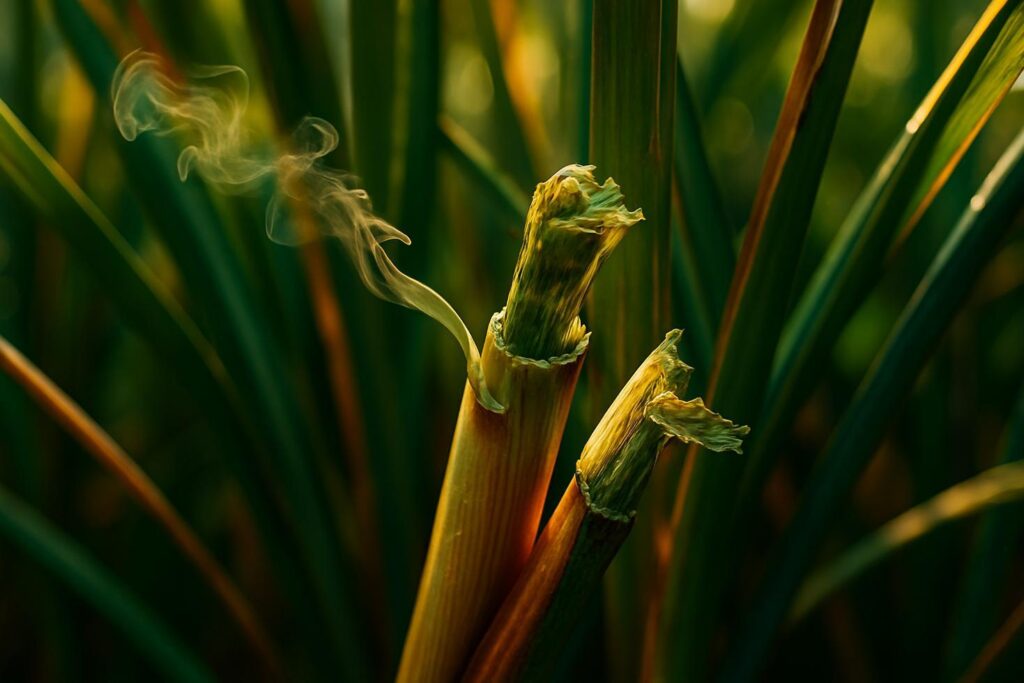
Lemongrass volatile oil peaks at 75–86°F — the same heat that drives mosquito activity. One mechanism, two threats, same trigger.
Lemongrass contains aromatic volatile compounds, including citronella-related oils, that can interfere with the olfactory receptors mosquitoes use to locate a host. That interference isn’t about masking a human scent with a pleasant smell. The volatile compounds disrupt the mosquito’s ability to triangulate a target in the first place. The effect is most pronounced when leaves are crushed or bruised, because that physical damage breaks open the oil glands packed just beneath the leaf surface.
The plant’s deterrent output isn’t constant. It rises with warmth and direct sun — conditions that also happen to define peak mosquito season.
What Happens in Lemongrass Leaves When They Are Crushed
Lemongrass stores its aromatic oils in glands just below the leaf surface. An intact, undisturbed plant releases some volatiles passively. A crushed or bruised leaf releases a significantly higher concentration into the surrounding air.
Breaking the leaf surface opens the oil glands directly. This is why handling lemongrass produces a strong citronella-forward scent almost immediately, and why the deterrent effect is consistently described as strongest after physical contact with the leaves.
How Citronella Compounds Affect Mosquito Olfactory Behavior
Mosquitoes locate hosts by detecting chemical cues — carbon dioxide, skin volatiles, and related compounds — through specialized olfactory receptors. Citronella and related volatile compounds interfere with this detection process. The mechanism is disruption of host-seeking behavior, not the triggering of a predator alarm signal. That predator-mimicry framing is an overstatement not supported by extension or research sources.
Olfactory receptor interference reduces a mosquito’s ability to locate a target rather than simply layering one odor over another. The distinction matters: it’s signal disruption, not scent competition.
What Verified Sources Actually Support About Lemongrass as a Deterrent
Extension and horticultural sources describe lemongrass as an insect deterrent with some supporting evidence for reduced mosquito attraction or landing behavior when crushed plant material is present. They do not verify a fixed six-foot protection radius, an “all summer” perimeter effect from an undisturbed plant, or any predator-alarm mechanism.
The 75–86°F temperature range is confirmed as the plant’s preferred growing window. Warmer conditions support volatile production alongside plant growth generally. The direct link between summer heat and a proportionally stronger mosquito-deterring effect is plausible but not established by the sources available.
Lemongrass is a fragrant, sun-loving grass with real but condition-dependent insect-deterring properties — strongest when leaves are actively bruised and least reliable as a passive perimeter plant left undisturbed.
The chemistry here is genuinely interesting. A tropical grass evolved oil chemistry that, as a byproduct, disrupts how one of the world’s most persistent insects finds its next meal. Crushing a leaf doesn’t release perfume. It releases a mechanism.
Frequently Asked Questions
Does lemongrass repel mosquitoes without crushing the leaves?
Unbruised lemongrass releases some volatiles passively, but the deterrent effect is consistently stronger when leaves are crushed or bruised to open the oil glands.
What compound in lemongrass affects mosquitoes?
Citronella-related volatile compounds are the primary agents. They interfere with mosquito olfactory receptors involved in host detection.
Does lemongrass create a mosquito-free zone around it?
Verified sources do not support a fixed protection radius. Results vary and depend on conditions, including whether the leaves have been disturbed.
Why does lemongrass smell stronger in hot weather?
Lemongrass grows and produces volatiles most actively at 75–86°F. Warmth and full sun support the plant’s overall oil production alongside general growth.