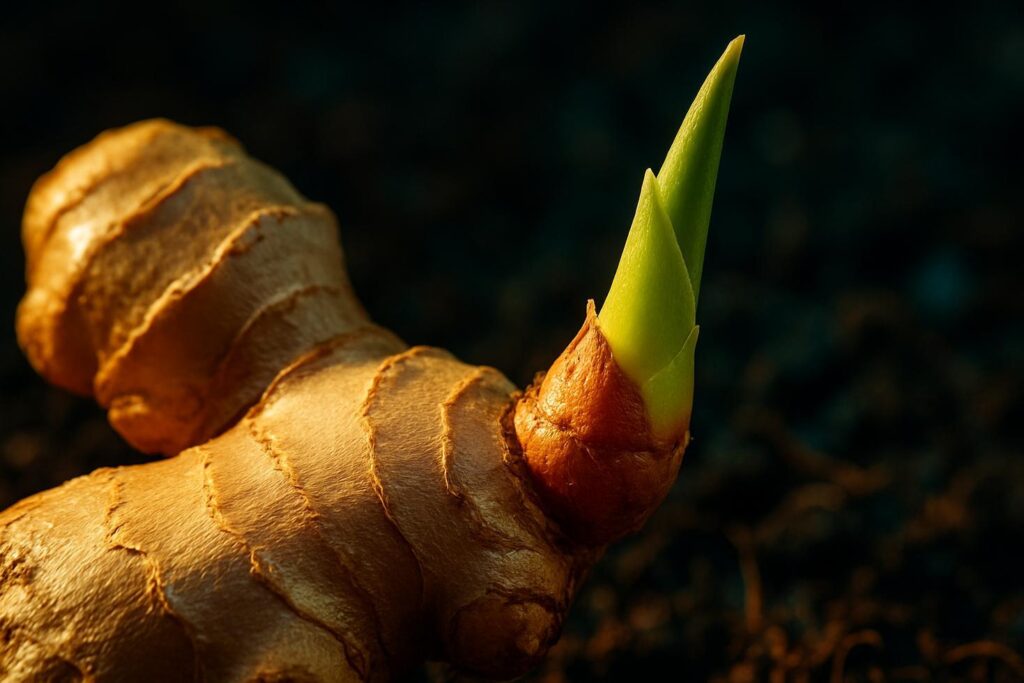
One grocery-store rhizome holds multiple bud eyes — each capable of sending shoots 2–4 feet tall while building an entirely new underground network. The original piece isn’t reborn. It’s replaced.
Zingiber officinale reproduces vegetatively through rhizome division, meaning a single grocery-store root can generate harvests indefinitely — not because the original tissue regrows, but because each divided segment produces successor tissue that can be divided again. That distinction matters. The original piece is gradually consumed as fuel for new growth. What remains is genetically identical but physically new.
Ginger grows 2–4 feet tall above ground, with leafy shoots emerging from swollen buds called eyes. Underground, the rhizome network expands outward in knobby segments, storing carbohydrates and branching continuously. Each division carries the full capacity to restart the entire structure.
Why Grocery-Store Ginger Can Become Planting Material
Not every piece from the produce aisle will sprout. Viability depends on the condition of the bud eyes and whether the rhizome has been treated post-harvest.
Some commercial ginger is irradiated or treated with growth inhibitors to prevent sprouting during storage. The University of Hawaiʻi CTAHR extension notes these postharvest treatments specifically suppress sprouting. Organic ginger avoids most chemical sprout suppression, making it the more reliable starting point. Firmness and plump skin signal adequate stored carbohydrates — the energy supply that fuels early shoot development.
How Bud Eyes Drive Rhizome Regeneration
Each eye on a ginger rhizome functions as a meristematic growing point. When conditions turn warm and moist, a bud eye generates both a leafy aerial shoot and a new underground rhizome segment simultaneously.
University of Florida IFAS extension confirms ginger sprouts under warm, moist soil conditions, and that rhizomes with sound buds are the correct propagation unit. The Royal Horticultural Society similarly identifies bud eyes as the source of both shoots and new rhizome tissue. One practical approach involves letting cut pieces air-dry for several days so the wound surface forms a callus, reducing infection risk from soilborne pathogens before planting — a standard technique in rhizome and seed-tuber handling.
The Mechanics of Indefinite Division
Because each harvested rhizome segment can itself be divided and replanted, the cycle has no biological endpoint. Farmers across Southeast Asia have propagated the same genetic lines across countless generations without planting seed.
Ginger rarely produces viable seed under cultivation. Division is the plant’s primary reproductive strategy, and it is structurally suited to it. The rhizome stores energy precisely to survive being broken apart and relocated. Each fragment, carrying even one healthy eye, holds the blueprint to rebuild the full structure.
The original grocery root does not persist. It hands itself off entirely.
Frequently Asked Questions
Does the original ginger root actually regrow?
No. The original rhizome tissue is consumed during sprouting and replaced by new growth generated from the bud eyes.
Why does organic ginger sprout more reliably from stores?
Commercial ginger is sometimes treated with sprout suppressants post-harvest; organic ginger is less likely to have received those treatments.
How tall does ginger grow from a single rhizome segment?
Ginger shoots reach 2–4 feet tall above ground, according to University of Florida IFAS extension documentation.
Can any piece of ginger rhizome be used for propagation?
A viable piece needs at least one firm, plump bud eye. Shriveled or eyeless segments lack the growing point required to generate new shoots.