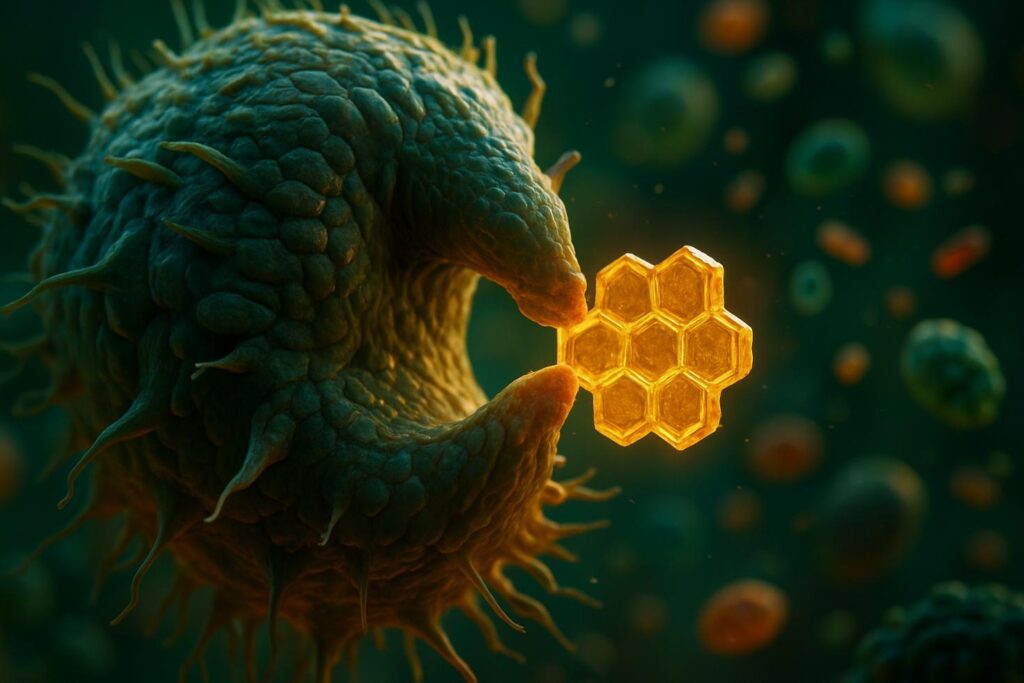
One molecule hits NF-κB, MAPK, and JAK/STAT simultaneously — decreasing regulatory T cells while driving Th1 effector output higher. Suppression and activation, from the same compound.
Curcumin, the primary polyphenolic compound in turmeric (Curcuma longa), modulates immune cell behavior by directly interfering with at least four intracellular signaling cascades — NF-κB, MAPKs, JAK/STAT, and Notch-1. That mechanistic specificity is what makes the molecule unusual. Most anti-inflammatory compounds blunt a single pathway. Curcumin adjusts several at once, and the outcome depends entirely on which immune cell is involved and what that cell is already doing.
The effect inside macrophages and T cells is not a flood of anti-inflammatory output. Curcumin binds to signaling proteins within these cells and reduces transcription of pro-inflammatory cytokines — TNF-α, IL-1β, and IL-6 — while simultaneously increasing certain anti-inflammatory mediators. The balance shifts. The volume comes down, but the system stays on.
How Curcumin Alters Signaling Pathways in Macrophages and T Cells
Inside macrophages, curcumin’s inhibition of NF-κB is the primary driver of reduced pro-inflammatory cytokine transcription. NF-κB normally acts as a master switch — when it fires, dozens of inflammatory genes follow. Curcumin interferes upstream, keeping that switch partially closed under conditions of excessive immune activation.
In T cells, the effect is bidirectional. Clinical studies show curcumin decreases Treg cell numbers through inhibition of Foxp3, the transcription factor that sustains regulatory T cell identity. Treg suppression paired with rising Th1 output means the adaptive immune system shifts toward active pathogen pursuit rather than self-restraint.
Curcumin’s Opposite Effects on Inflammation and Tumor Cell Attack
The mechanism that most surprises immunologists is context-dependence. In an overactivated immune environment, curcumin reduces the inflammatory signal. In a context where NK cells are targeting tumor cells, the same compound sharpens that killing capacity.
This is not the compound “reading the room” in any intentional sense. It is the result of pathway-specific binding across distinct cell types — each cell interprets the same molecular input through its own signaling architecture, producing different downstream outcomes. One molecule, genuinely opposite jobs, depending on cellular context.
What This Means for Understanding Curcumin’s Documented Effects
Observed effects in human and animal models — reduced inflammation, decreased allergic responses, enhanced innate immunity against tumors and pathogens — follow directly from these pathway-level changes. Curcumin is also well tolerated at high dosages in clinical trials, though specific tolerated ranges vary by study design.
Bioavailability remains a real constraint. Adjuvants like piperine are used to enhance absorption, because curcumin’s activity at the signaling level only matters if the compound reaches the target cells in sufficient concentration. Poor absorption without formulation support is the practical bottleneck between mechanism and effect.
The picture that emerges from the research is not a supplement story. It is a signaling story — one compound, four pathways, multiple cell types, and outcomes that run in opposite directions depending on context. That specificity is the interesting part.
Frequently Asked Questions
What pathways does curcumin inhibit in immune cells?
Curcumin inhibits NF-κB, MAPKs, JAK/STAT, and Notch-1 signaling pathways in immune cells including macrophages, T cells, and dendritic cells.
Does curcumin suppress or boost the immune system?
It does both, depending on context. It reduces pro-inflammatory cytokines in overactivated states while increasing Th1 effector T cells and NK cell activity against tumors.
How does curcumin affect regulatory T cells?
Clinical studies show curcumin decreases Treg cell numbers by inhibiting Foxp3, while increasing IFN-γ production from Th1 effector T cells.
Is curcumin safe to take at high doses?
Clinical trials indicate curcumin is well tolerated and non-toxic even at high dosages, though specific tolerated dose ranges vary by study design.