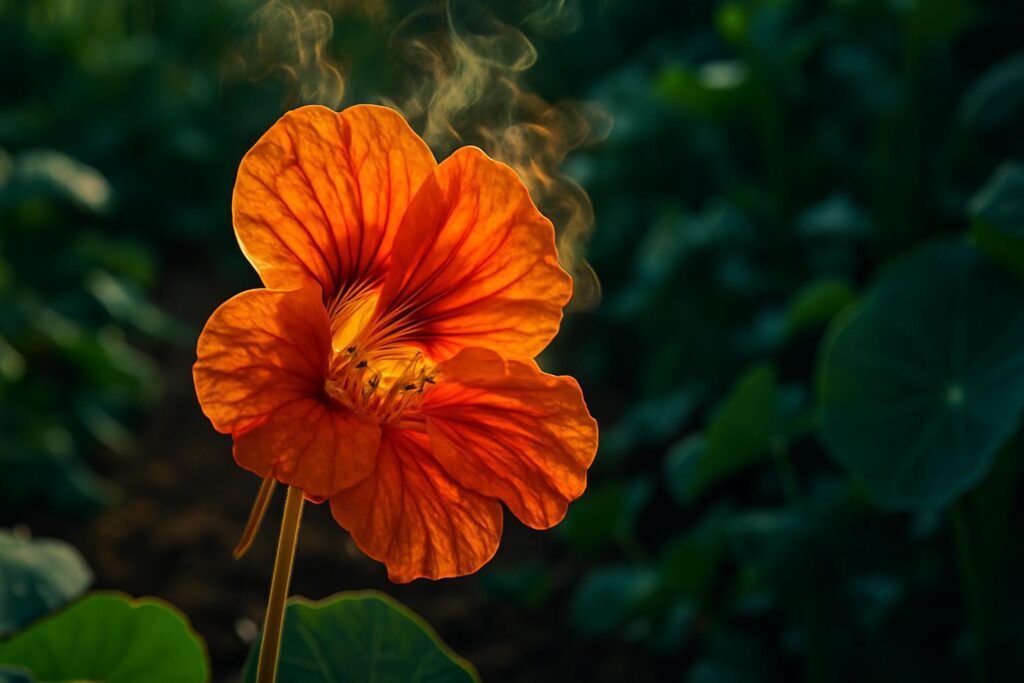
Nasturtium leaves hold up to 3.8 mg/g of a glucosinolate aphids can smell from feet away — planted 7–10 days early, that signal cuts aphid load on adjacent lettuce by 68%. The bait becomes the bodyguard.
Nasturtiums attract aphids rather than repel them, and that attraction is the entire mechanism. The plant’s leaves contain gluconasturtiin — a glucosinolate compound — at concentrations reaching 3.8 mg per gram of dry leaf tissue. When tissue is damaged or metabolically active, the glucosinolate–myrosinase system converts that compound into phenethyl isothiocyanate, a volatile mustard-oil signal that certain aphid species use to locate a suitable host.
The nasturtium broadcasts that signal. Nearby aphids — black bean aphid, green peach aphid, cabbage aphid — pick it up and move toward the source. Not from across the neighborhood; aphids are weak fliers and make host choices among plants within a few feet. But within that range, the nasturtium consistently wins the competition for attention.
The Chemistry Behind Nasturtium’s Aphid Attraction
Nasturtiums share glucosinolate chemistry with brassicas — the plant family many specialist aphid species evolved to target. When nasturtium tissue is active or damaged, the glucosinolate–myrosinase system releases isothiocyanate volatiles into the surrounding air. Those volatiles function as olfactory cues. Aphids detect them and interpret the signal as a feeding opportunity.
What gives nasturtiums an edge over nearby vegetables is timing and intensity. They begin emitting these volatiles earlier in the season than many brassicas, and the signal is stronger than tomato or pepper foliage produces at the same growth stage. When aphids arrive searching for a host and both nasturtium and lettuce are present, the nasturtium is the louder option.
Why the 7–10 Day Planting Window Changes Everything
Field trial data compiled from Cornell University’s Vegetable Program found that nasturtium trap crops reduced aphid colonization on adjacent lettuce by up to 68% — but only when nasturtiums were sown 7–10 days before the main crop emerged. The lead time matters because it allows the trap plant to establish, become metabolically active, and start releasing volatiles before aphids begin making host-selection decisions.
Sow too late, and the vegetables are already emitting their own signals. The nasturtium loses its sensory advantage over emerging vegetable foliage before it can concentrate the aphid population. The trap works when it is ready before the hunt starts, not alongside it.
Field trials citing University of California IPM and Rodale Institute data show a broader 40–70% reduction in pest pressure on main crops when nasturtium borders are placed correctly and timed properly.
How to Interpret What the Research Actually Supports
The 68% figure applies to adjacent plants within a short radius — roughly 3–5 feet, based on placement guidance from multiple sources. It does not describe protection of an entire garden bed from a single border row. Aphids choose among nearby hosts; the nasturtium wins that local competition, not a garden-wide one.
Heavily infested nasturtiums serve a second function. Lady beetles, lacewings, and parasitic wasps are drawn to dense aphid colonies, building a predator population that further reduces pressure on both trap and main crops.
The nasturtium does not protect by creating a barrier. It protects by being a better target.
Frequently Asked Questions
Do nasturtiums repel aphids?
No. Multiple sources explicitly correct this misconception. Nasturtiums attract aphids via isothiocyanate volatiles and function as sacrificial hosts, not repellents.
How far should nasturtiums be planted from vegetables?
Three to five feet from the protected crop is the recommended range; BloomingExpert specifies 4–5 feet for beans and tomatoes specifically.
What happens if nasturtiums are planted at the same time as the main crop?
The timing advantage disappears. The 68% reduction in aphid colonization was recorded only when nasturtiums had a 7–10 day head start before crop emergence.
Which aphid species are attracted to nasturtiums?
Black bean aphid (Aphis fabae), green peach aphid (Myzus persicae), and cabbage aphid are consistently documented colonizing nasturtiums as a preferred host.