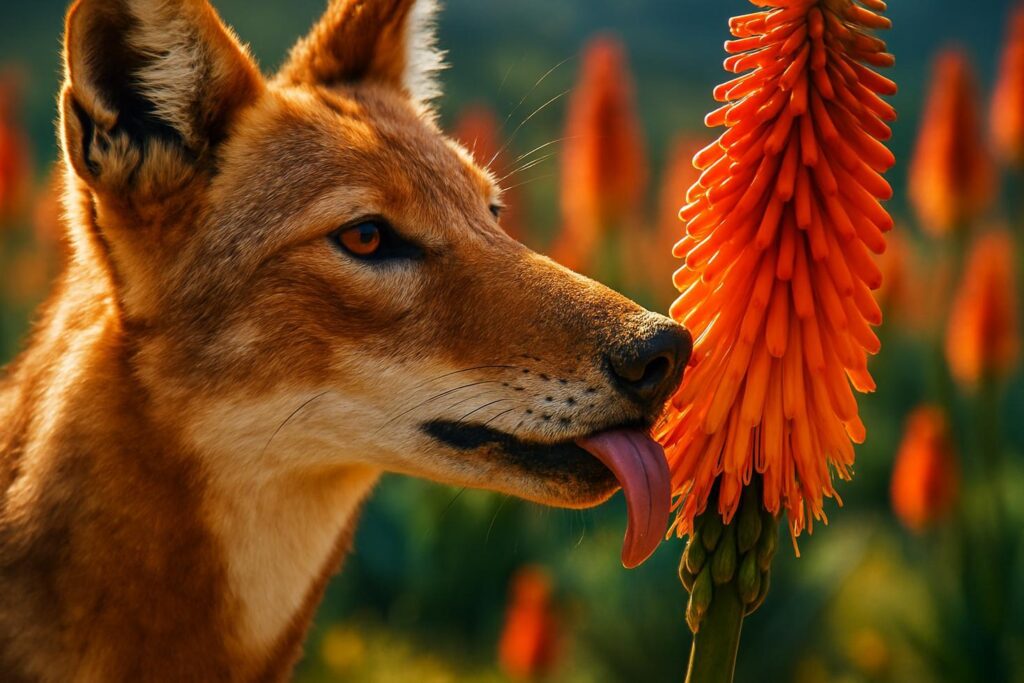
A single wolf pressed its muzzle into 30 Kniphofia foliosa stalks in one trip — leaving each time with a snout dusted gold. Researchers now think fewer than 500 surviving wolves may be doing two ecological jobs at once.
Ethiopian wolves are documented nectar feeders, and the pollen they carry on their muzzles between flower stalks makes them the first large carnivorous predator recorded as a potential pollinator. The discovery came from systematic field observation, not a lab. Researchers from the Ethiopian Wolf Conservation Programme followed six wolves across three packs over four days in May and June 2023 and found the behavior widespread across individuals.
The flower involved is Kniphofia foliosa — a tall red-orange torch lily endemic to the Ethiopian highlands. It produces nectar in volumes rich enough to attract birds and insects. It now also attracts wolves.
How Pollen Ends Up on an Ethiopian Wolf’s Muzzle
Wolves approach individual Kniphofia foliosa stalks and lick the lower, most mature flowers, which carry the highest nectar concentration. Pushing their faces into the inflorescence repeatedly coats the fur and skin around the snout with fine pollen grains.
Observers describe the muzzles as almost completely covered in yellow pollen after a single stalk visit. That load travels with the wolf to each subsequent plant. The pollen transfer mechanism is the same one that operates in bird and insect pollination — repeated contact with reproductive flower structures across multiple plants — though researchers note wolves are inadvertent participants, not specialized mutualists.
What the Field Observations Actually Confirmed
Researchers have not yet measured seed-set or reproductive success tied to wolf visits, so the pollination effect remains inferred rather than experimentally confirmed. What is confirmed: pollen loads on muzzles are substantial, movement between stalks is consistent, and the behavior appeared across multiple packs, not just one habituated group.
The nectar itself is characterized as supplemental to the wolves’ diet — closer to a sweet treat than a nutritional requirement. Their core diet remains small mammals. Nectar foraging does not represent a dietary shift away from carnivory; it coexists with it.
Why This Matters for a Species With Fewer Than 500 Individuals Left
The Ethiopian wolf is critically endangered, with total population estimates under 500 individuals scattered across fragmented mountain ranges. Their role in afro-alpine ecosystems was previously understood through one lens: controlling rodent populations through predation.
The nectar-feeding observations add a second ecological role to that picture. A predator already doing significant work regulating small mammal populations may also be moving pollen through a flower community that has few other large-bodied visitors at that altitude.
The cold, high plateau of the Ethiopian highlands turns out to have an unlikely regular in its flower fields. A predator built for speed and rodent hunting wanders stalk to stalk, face gilded in pollen, connecting plants it will never know it touched.
That is enough.
Frequently Asked Questions
Are Ethiopian wolves actually pollinators?
Researchers describe them as potential or inadvertent pollinators. Pollen transfer via the muzzle is observed, but seed-set data confirming reproductive outcomes have not yet been published.
What flower do Ethiopian wolves feed on?
Kniphofia foliosa, a red-orange torch lily endemic to the Ethiopian highlands, which produces nectar also visited by birds and insects.
How many flowers does one wolf visit per trip?
Field observations documented up to 30 stalks per foraging bout, with one individual spending approximately 1.5 hours moving between flowers.
How rare are Ethiopian wolves?
Fewer than 500 individuals remain in the wild, making them one of the rarest canids on Earth.