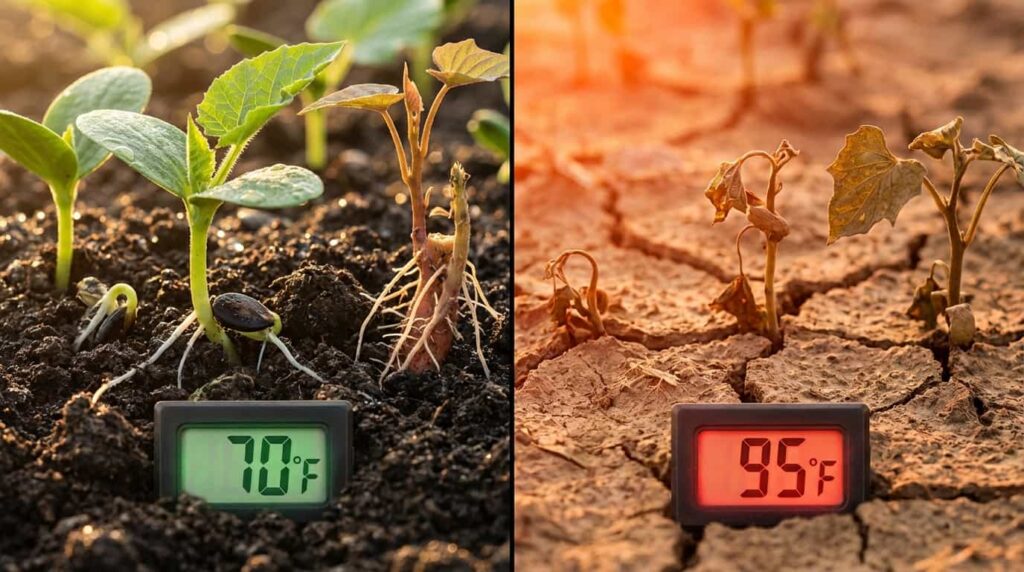
Your watermelons are counting soil temperature, not calendar days. They refuse to germinate below 70°F but panic above 95°F. Sweet potatoes do the same math. Plant now in Zone 8-13 and they’ll establish roots before summer heat locks them out.
Soil Temperature: The Real Start Signal
Watermelons and sweet potatoes care more about soil warmth than calendar dates. They grow best when the soil is warm, but not scorching hot.
Cold soil slows or stops germination. Extreme heat can damage new roots and tender growth.
Seeds and Slips: Built‑In Thermostats
Watermelon seeds respond to temperature through enzymes in the seed coat. When soil warms enough, these enzymes help start germination.
Sweet potato slips also “read” soil warmth through their root tips. Warm, steady soil encourages new roots to form and spread.
It is helpful to think in ranges, not exact numbers. Plants do not flip from “safe” to “danger” at a single degree.
The Sweet Spot for Warm Zones
In zones 8–13, late spring usually brings the right balance. Soils have warmed, but air temperatures are not yet at peak summer levels.
Planting in this window helps roots get established before intense heat. Deep, healthy roots make plants more resilient when summer arrives.
By mid‑summer, well‑rooted plants handle stress far better. They can keep growing, flowering, and setting fruit instead of shutting down.
Takeaway for Gardeners
Check soil temperature before planting, not just the calendar date. Aim for consistently warm soil, then protect plants from extreme heat.
Give seeds and slips time to build strong root systems. Your watermelons and sweet potatoes will reward you with better growth and yield.